Disclaimer: These images were generated using artificial intelligence and may contain inaccuracies or inconsistencies.
They are provided solely as a visual aid to facilitate the rapid understanding of the key ideas presented
in these article. Our editorial team conducts ongoing reviews of AI-generated images and will correct
or replace them whenever an error or discrepancy is identified or reported.
Authors:
Loredana
Ilie Piechowska
Abstract:
About the Journal
BRAIN-BroadResearchinArtificialIntelligenceandNeuroscience aims to create links between researchers from apparently different scientific fields, such as Computer Science and Neurology. In fact, many topics, such as Artificial Intelligence, Cognitive Sciences, and Neurosciences, can intersect in the study of the brain and its intelligence functions.
Our journal contains peer-reviewed articles. These should be original and unpublished works by the authors. The peer review process is conducted anonymously, with reviewers being well-recognised scientists from our scientific board, as well as independent experts.
Some innovative young researchers from around the world had the idea to edit and publish the BRAIN journal in order to make an agora of an interdisciplinary study of the brain. Young scientists and seniors in artificial intelligence, cognitive sciences, and neurology fields are expected to publish their original works in our journal.
BRAIN Journal is an open-source journal, dedicated to promoting the latest scientific news in the field of multidisciplinary studies of the brain, consciousness, and their connection with artificial intelligence.
BRAIN Journal supports research and novelty in health, medicine, and the life sciences.
Topics
The journal’s main topics of interest are related to:
Medical Sciences: Neuroscience, Neuroimaging, Neuroenhancement, Neurology, Psychiatry, Medical anthropology (topics related to brain), Forensic medicine, Genome sequencing and genomic studies (using computers and/or Artificial Intelligence in genomic studies), Neuropathology, Brain pathology, Medical ethics and bioethics, Neurosurgery, Evolutionary biology, Embryology (topics related to nervous system development), Anatomopathology (topics related to nervous system);
Psychology: Cognitive psychology, Psychotherapies, Social work with mentally disabled people, Psychopathology;
Artificial Intelligence: Artificial Intelligence and computing in medicine, Natural language processing, Formal and modal logics, Brain-machine communication, Machine learning, Deep learning programming, Language processing, Robotics (especially using robotics in medicine), Brain simulations, Computer simulations, Virtual reality and enhanced reality;
Varia: Philosophy of mind and related, Neuroethics, Philosophy of Artificial Intelligence, Ethics of artificial intelligence technologies, Game theory, Decision theory, Transhumanism, Philosophy of language.
Journal History and website content
BRAIN journal was edited by EduSoft from its first volume, in 2010, until issue 3 of volume 10 (2019). Based on the contract between EduSoft and Lumen, starting with Issue 4, Volume 10, 2019, and finishing with Issue 2, Volume 15, 2024, the Journal was published by LUMEN Publishing House, on behalf of EduSoft.
The content of the journal until August 2024 is available in mirroring, both on
https://lumenpublishing.com/journals/index.php/brain/ (Lumen Publishing)
and https://www.edusoft.ro/brain/index.php/brain/index (EduSoft Publishing)
The collaboration between EduSoft and Lumen officially concluded in August 2024. Consequently, starting with Issue 3 of Volume 15 (2024), BRAIN Journal is exclusively edited and published by EduSoft Publishing.
BRAIN. Broad Research in Artificial Intelligence and Neuroscience has an Attribution-NonCommercial-NoDerivs CC BY-NC-ND
Call for papers
We seek papers for our next issues of the BRAIN journal, from academicians, professors, researchers, doctors and clinicians, linguists, psychotherapists, PhD students, and anyone connected to the journal’s topics.
We welcome contributions from all over the world. We plan to put out the next issue of the BRAIN in May 2024. However, a special issue on neuroscience will be published in March-April 2025. You are invited to submit an article on any topic relevant to our journal. The deadline for sending articles is the 15th of March, 2025. Send your articles to brain@edusoft.ro or sign in to use the online system for submitting papers: https://brain.edusoft.ro/
Journal Contact
Mailing Address
EduSoft Publishing
Address: Romania, 600065 Bacau, 82/C/13, 9 Mai street.
PRINT: ISSN 2068 – 0473
ONLINE: E-ISSN 2067 - 3957
Principal Contact
Bogdan Patrut
Email: brain@edusoft.ro
Support Contact
Asociatia EduSoft
Address: Romania, 600258 Bacau, 1/A1/13, Mihai Eminescu street
Email: asociatia@edusoft.ro
Editorial Team
Editor-in-Chief
Assoc. Prof. Dr. Bogdan Patrut, Alexandru Ioan Cuza University of Iasi, Romania
Associate Editors
Prof. Dr. Kadiamada Nanaiah Roy Chengappa, University of Pittsburgh, United States
Prof. Dr. David Roe, Department of Community Mental Health, University of Haifa, Israel
Prof. Dr. Jude Hemanth, Karunya Institute of Science and Technology, India
Prof. Dr. Michael Davidson, Medical School, Nicosia University, Cyprus
Prof. Dr. Vassilios Fanos, University of Cagliari, Italy
Prof. Dr. Orhan Derman, Hacettepe University Research Information System, Turkey
Assoc. Prof. Dr. Kishor Datta Gupta, Clark Atlanta University, Georgia (GA), United States
Assoc. Prof. Dr. Utku Kose, University of North Dakota, United States
Dr. Rodica Petrea, Boston University Aram V. Chobanian & Edward Avedisian School of Medicine, the Framingham Heart Study, Creighton University, and the University of Kentucky, United States
All submissions undergo a thorough review by an editor and selected experts. Authors will receive feedback and ratings within 3-10 weeks of submission. Accepted manuscripts must be revised based on reviewers' comments before final acceptance.
Starting with Issue 3 of Volume 15 (2024) of BRAIN – Broad Research in Artificial Intelligence and Neuroscience, the acceptance rate for submitted articles has decreased to 45%.
Additionally, we are pleased to announce that, on occasion, articles deemed to be of exceptional value and significance will be exempted from the article processing and publication fees.
For any questions regarding the submission, contact Ms. Loredana Ilie Piechowska at office@edusoft.ro.
Articles (peer reviewed)
Disclaimer: This image was generated using artificial intelligence and may contain inaccuracies or inconsistencies.
It is provided solely as a visual aid to facilitate the rapid understanding of the key ideas presented
in this article. Our editorial team conducts ongoing reviews of AI-generated images and will correct
or replace them whenever an error or discrepancy is identified or reported.
Authors:
Ilya
Levin
, Natalia
Bukhshtaber
, Konstantin
Minyar-Beloruchev
Abstract:
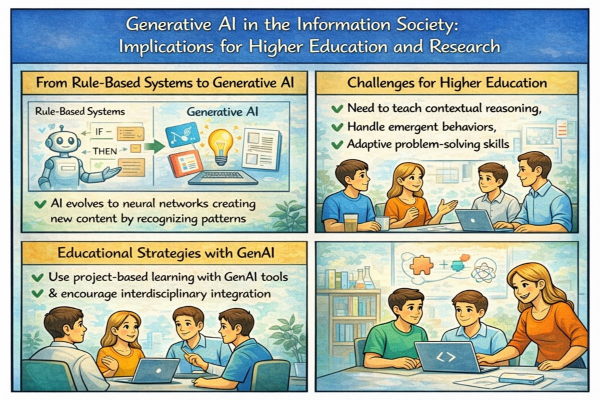
Generative Artificial Intelligence (GenAI) represents a fundamental shift in AI development, moving from rule-based systems to neural networks capable of creating novel content and solving complex problems through pattern recognition and contextual understanding. This evolution challenges traditional Computer Science (CS) paradigms, as evidenced by innovations in large language models and diffusion-based image generation. This paper investigates how GenAI's emergence affects education and research in computer science and related fields. Through White's cultural model—examining technological, societal, and institutional dimensions—we analyse how GenAI's capabilities diverge from traditional CS approaches in both theory and practice. Our research reveals specific challenges for higher education, including the need to teach contextual reasoning, handle emergent behaviors, and develop adaptive problem-solving skills. We propose educational strategies such as project-based learning with GenAI tools and cross-disciplinary integration. These recommendations aim to establish GenAI as a distinct academic discipline while preparing students and researchers for its increasing role in scientific and professional practices.
Disclaimer: This image was generated using artificial intelligence and may contain inaccuracies or inconsistencies.
It is provided solely as a visual aid to facilitate the rapid understanding of the key ideas presented
in this article. Our editorial team conducts ongoing reviews of AI-generated images and will correct
or replace them whenever an error or discrepancy is identified or reported.
Authors:
Jana
Hubinská
, Dominika
Doktorová
, Michal
Masár
Abstract:
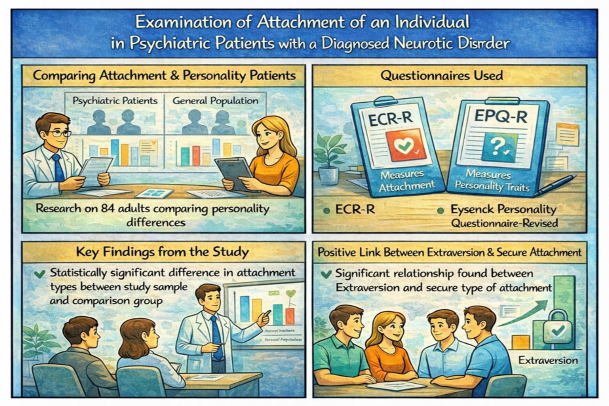
The object of our research is to determine the connection of negative attachment in connection with an individual's personality. We focus on comparing attachment and personality characteristics in psychiatric patients and the general population. The research sample consists of 84 respondents (N = 84), of which 48 were men and 36 were women, aged 24 to 68 years and the average age of all respondents was 43.42. Within the methods, we chose two questionnaires: The Experiences in Close Relationships-Revised (ECR-R) to measure attachment and The Eysenck Personality Questionnaire-Revised (EPQ-R) to identify personality traits. We observed a statistically significant difference in the type of attachment between the study sample and the comparison group. We did not observe a statistically significant relationship between the neuroticism scale and the anxious/ambivalent type of attachment in the study sample. There was no positive statistically significant relationship between the neuroticism scale and the avoidant type of attachment in the study sample. We found a positive statistically significant relationship between the extraversion scale and the secure type of attachment in all respondents.
Disclaimer: This image was generated using artificial intelligence and may contain inaccuracies or inconsistencies.
It is provided solely as a visual aid to facilitate the rapid understanding of the key ideas presented
in this article. Our editorial team conducts ongoing reviews of AI-generated images and will correct
or replace them whenever an error or discrepancy is identified or reported.
Authors:
Ciprian
Vlad
, Răzvan
Șolea
, Marian-Viorel
Crăciun
, Cristinel-Marius
Tanasă
, Nicolae
Badea
, Viorina
Clejăneanu
, Adrian
Zagăr
, Cristian-Victor
Lungu
, Anamaria
Ciubară
Abstract:
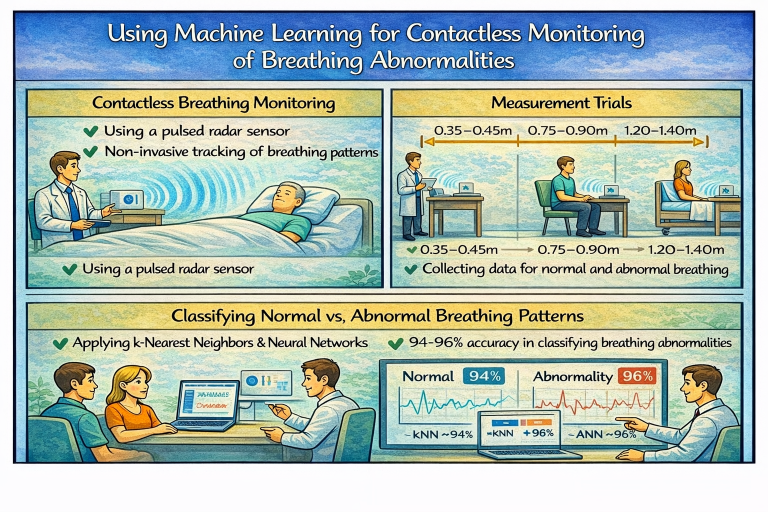
The objective of the present work was to develop and evaluate different methods for measuring and detecting abnormalities in breathing patterns using a pulsed coherent radar sensor. This study represents a crucial initial step toward developing a life-saving hardware product. The contactless monitoring of breathing abnormalities offers significant advantages over traditional methods using contact sensors, particularly in medical scenarios such as post-stroke recovery. Experiments were conducted at three different distances (0.35 − 0.45m, 0.75 − 0.90m, and 1.20 − 1.40m) using a pulsed coherent radar system. Machine learning methods, including kNN (k-Nearest Neighbors) and ANN-MLP (Artificial Neural Networks Multilayer Perceptron), were employed to distinguish whether the monitored individual exhibited normal or abnormal breathing patterns. Our analysis revealed that employing ML models and data signals from the radar sensor holds promise for classifying breathing pattern abnormalities. This paper covers the steps performed to accomplish this: a) Equipment and Data Processing; b) Measurement Trials and Data Collection; c) Study involving k-Nearest Neighbors method and Feed-Forward Neural Networks.
Disclaimer: This image was generated using artificial intelligence and may contain inaccuracies or inconsistencies.
It is provided solely as a visual aid to facilitate the rapid understanding of the key ideas presented
in this article. Our editorial team conducts ongoing reviews of AI-generated images and will correct
or replace them whenever an error or discrepancy is identified or reported.
Authors:
Dan
Alexandru Szabo
, Virgil
Ene-Voiculescu
, Silvia
Teodorescu
, Alin
Larion
, George
Danut Mocanu
, Alexandru
Rares Puni
, Iamina-Camelia
Ilea
, Carmen
Pârvu
Abstract:
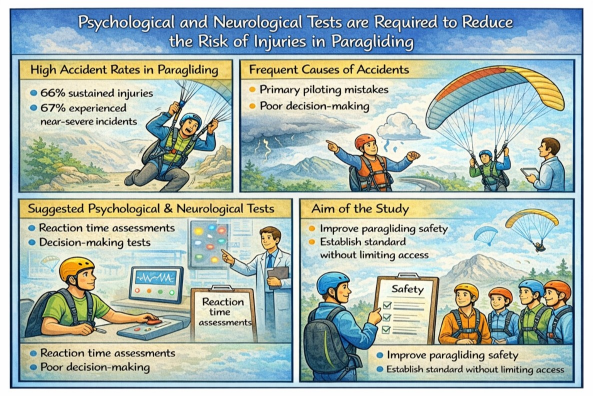
The study’s objective is to analyse and comprehend the types, frequency, and causes of paragliding pilot accidents to identify preventative and reducing measures in the future, such as a suitable physical training program designed explicitly for paragliding pilots. This study hypothesized that several factors, including the pilot’s experience level, weather conditions, terrain, equipment quality, attitude toward the sport, and adherence to safety regulations, may be related to the frequency of paragliding accidents. The study’s findings indicated a high accident rate since 66% of respondents had injuries while paragliding, and 67% had an occurrence that may have resulted in a pilot suffering severe injury. The analysis shows the frequent causes of accidents are primary piloting mistakes and poor decision-making as technological faults played a minor role. Equipment used for paragliding seldom malfunctions if it is routinely inspected and tested; the only exception is when it is subjected to abnormally high stresses while in flight. Oversteering of the wing or, on the other hand, inadequate reaction—specifically, inadequate pilot training in flap control and active piloting—were the leading causes of these mistakes. Poor judgments about weather and flying conditions or inadequate familiarity with the area landscape and characteristics caused some of these mistakes. In conclusion, we address the necessity to establish a standard for the ideal paraglider, conceiving psychological and neurological tests without reducing the access to this adrenaline rush sport, but increasing its safety.
Disclaimer: This image was generated using artificial intelligence and may contain inaccuracies or inconsistencies.
It is provided solely as a visual aid to facilitate the rapid understanding of the key ideas presented
in this article. Our editorial team conducts ongoing reviews of AI-generated images and will correct
or replace them whenever an error or discrepancy is identified or reported.
Authors:
Monica
Calderaro
, Vincenzo
Mastronardi
, Șerban
Ionuț Virgil
, Pasquale
Ricci
, Adrian
Otovescu
, Cristina
Ilie
, Oprea
Valentin Bușu
Abstract:
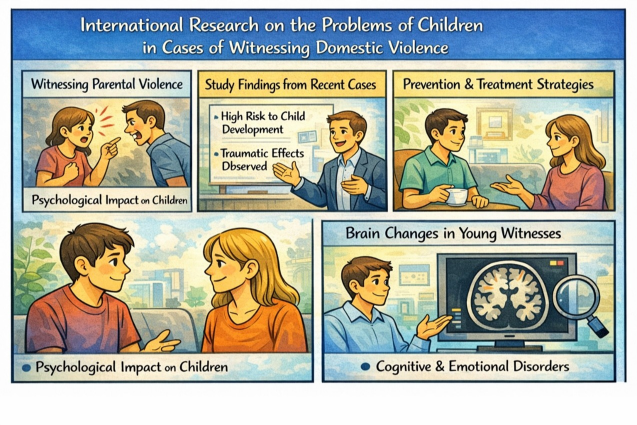
The research has the clear objective of highlighting possible psychophysical damage in minors as a result not of physical or sexual violence or physical neglect, but rather as a result of frequent parental quarrels, experienced by the children in a traumatic way (witnessing violence). The inspiration for the present research was provided by a further 20 recent cases observed in the course of as many civil proceedings on the subject of child custody with highly conflicting parental couples. The research shows how witnessed violence can constitute a significant risk factor in the psycho-physical development of the minor and how, as such, it deserves particular attention in the context of prevention and therapy of subjects who have experienced similar events. It follows that "the role of victim", in cases of domestic violence, is not only attributable to those who suffer the violent actions (one of the partners), but also to those (such as children), although not being the object of such violence, he is involved as a witness/observer. The research also deals with secondary and tertiary prevention activities. This paper will consider: Generalities on the subject of witnessing violence; Previous research on the harm resulting from witnessing domestic violence between parents; The most advanced prevention and treatment strategies; The classification of batterers and feminicides in the primary prevention of intra-family violence; The negative effects of witnessing violence in childhood and young adults: from the development of brain morphology to mental and behavioural disorders; Targeted research with encephalic Nuclear Magnetic Resonance with VBM (Voxed- Based Morphometry); Further research on the subject of witnessing violence; The substantial difference between PTSD and C-DPTS.
Disclaimer: This image was generated using artificial intelligence and may contain inaccuracies or inconsistencies.
It is provided solely as a visual aid to facilitate the rapid understanding of the key ideas presented
in this article. Our editorial team conducts ongoing reviews of AI-generated images and will correct
or replace them whenever an error or discrepancy is identified or reported.
Authors:
Ioannis
Mavroudis
, Symela
Chatzikonstantinou
, Foivos
Petridis
, Dimitrios
Kazis
, Fatima
Zahra Kamal
, Sorina
Diaconu
, Malina
Visternicu
, Alin
Ciobica
, Alin
Iordache
, Carmen
Stadoleanu
, Antoneta
Dacia Petroaie
, Bogdan
Novac
Abstract:
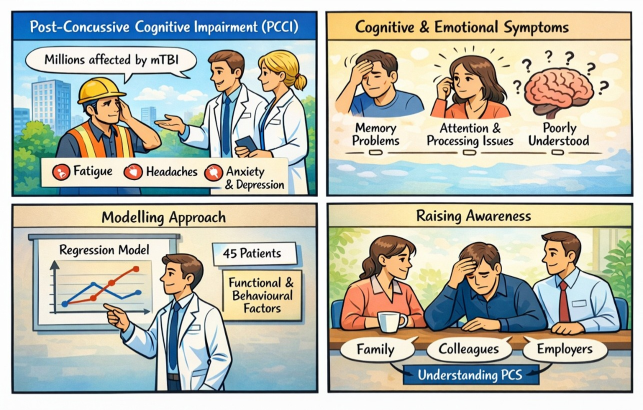
Mild traumatic brain injury (mTBI) is a common public health problem that significantly affects millions of people, especially people in high-risk occupations. Post-concussive cognitive impairment (PCCI) is a prevalent and debilitating outcome of mTBI that has a major impact on cognitive function as well as quality of life, thus affecting long-term health outcomes. Of all traumatic brain injuries, mTBI accounts for 58-88%, according to epidemiological studies. However, mTBI sufferers report a multitude of cognitive and emotional symptoms that constitute post-concussive syndrome (PCS). The most reported symptoms include fatigue, headaches, sensitivity to noise, anxiety, and depression. Although there is progress in understanding biochemical and structural changes after mTBI, memory, attention, and processing speed in PCCI remain poorly understood. This study aims to develop a regression model based on the modified version of Brown's disease cognition model. This model describes both cognitive and behavioural responses as indicators of functional aspects in PCS. In this study, data from 45 patients were analysed to reveal the functional nature of cognitive impairment in PCS, to open the way for more precise interventions. In addition to investigating the physiological aspects of PCS, we aim to recognise the inherent social dimension of the experiences of individuals affected by PCS. Additionally, the often subtle and non-observable nature of symptoms can bring challenges in interpersonal relationships, emphasising the need to enhance awareness among family, colleagues, and employers of the cognitive and behavioural aspects of PCS.
Disclaimer: This image was generated using artificial intelligence and may contain inaccuracies or inconsistencies.
It is provided solely as a visual aid to facilitate the rapid understanding of the key ideas presented
in this article. Our editorial team conducts ongoing reviews of AI-generated images and will correct
or replace them whenever an error or discrepancy is identified or reported.
Authors:
Lorena
Mihelač
Abstract:
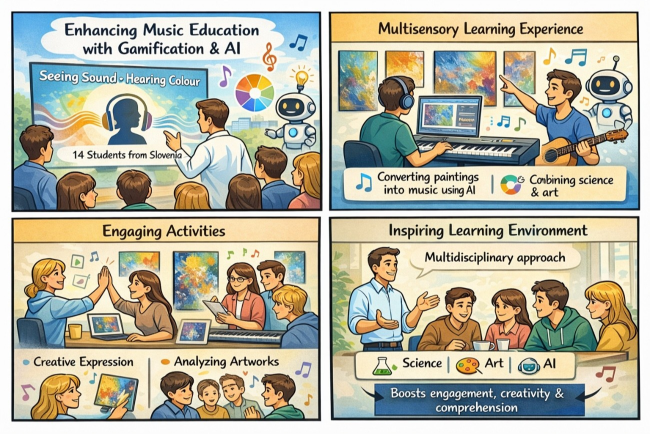
This study introduces “Seeing Sound, Hearing Color," a novel educational game aimed at exploring the complex interplay between sound and color using an interdisciplinary and AI-enhanced pedagogical framework. The game, conducted from September 2023 to January 2024, was developed in conjunction with the exhibition of Merlin’s paintings, showcased in February 2024 in Novo Mesto, Slovenia. In this game, 14 students were engaged from the School Center Novo Mesto, SGLVŠ, as part of their music expression curriculum. The activities incorporated elements of science, art, and artificial intelligence to enable students to study cross-modal perception. Students examined colours from Merlin's paintings and converted these visual stimuli into 32 musical excerpts, promoting a profound synthesis of artistic interpretation and scientific concepts. This study underscored the need of innovative learning environments by fostering inspiration, inventiveness, and self-expression. The study emphasises the educational significance of multisensory and interdisciplinary methods, illustrating how artificial intelligence may improve student engagement and enrich comprehension in both artistic and scientific domains.
Disclaimer: This image was generated using artificial intelligence and may contain inaccuracies or inconsistencies.
It is provided solely as a visual aid to facilitate the rapid understanding of the key ideas presented
in this article. Our editorial team conducts ongoing reviews of AI-generated images and will correct
or replace them whenever an error or discrepancy is identified or reported.
Authors:
Raluca – Maria
Rusu Andron
, Romulus-Dan
Nicoară
, Horia-George
Coman
Abstract:
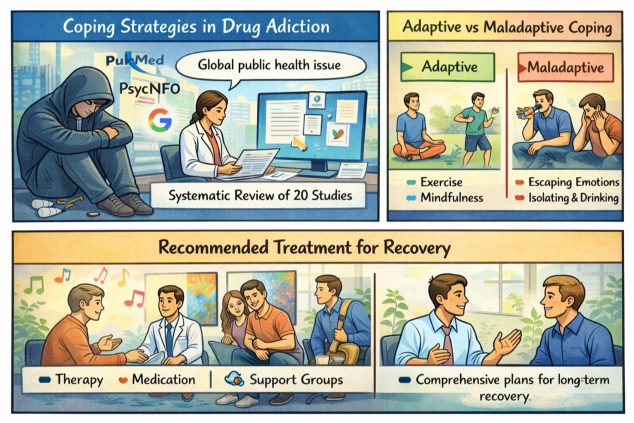
Drug addiction is a major global public health problem characterised by the compulsive use of drugs despite their harmful effects on various health dimensions. This systematic review examines the coping strategies used by individuals struggling with drug addiction and evaluates their effectiveness on the road to recovery. A comprehensive literature search of academic databases such as PubMed, PsycINFO, and Google Scholar identified 20 relevant studies published between 1990 and 2023. These studies were analysed to classify coping strategies into adaptive and maladaptive categories. The review highlights the importance of promoting adaptive coping strategies and addressing maladaptive behaviours in therapeutic interventions. Comprehensive treatment plans involving multiple adaptation strategies are recommended for long-term recovery. Future research should focus on identifying the most effective combinations of coping strategies and integrating them into drug addiction treatment programs.
Disclaimer: This image was generated using artificial intelligence and may contain inaccuracies or inconsistencies.
It is provided solely as a visual aid to facilitate the rapid understanding of the key ideas presented
in this article. Our editorial team conducts ongoing reviews of AI-generated images and will correct
or replace them whenever an error or discrepancy is identified or reported.
Authors:
Ancuta
Andreea Miler
, Mălina
Visternicu
, Viorica
Rarinca
, Carmen
Stadoleanu
, Alin
Ciobica
, Mădălina
Maxim
, Mihaela
Toader
, Daniel
Vasile Timofte
, Anton
Knieling
Abstract:
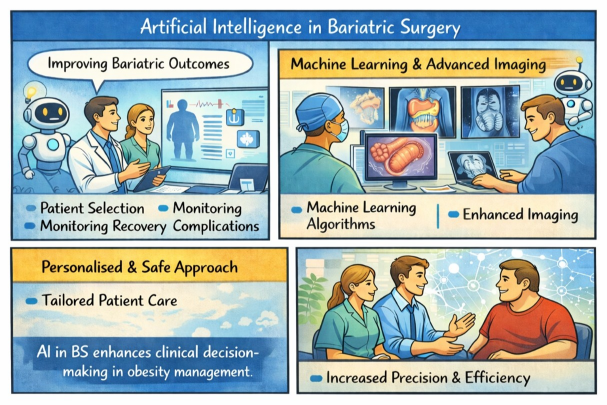
Artificial intelligence (AI) is having a major impact in the field of bariatric surgery (BS) as it helps improve outcomes for patients with severe obesity. This advanced technology optimises clinical decision-making processes and helps reduce the risks associated with surgery. In the context of bariatrics, AI is used to identify suitable patients, and monitor postoperative recovery but also to predict complications that may occur. BS is an effective solution for treating severe obesity, a condition characterised by the excessive accumulation of body fat, which can lead to serious health problems. However, this surgical field faces challenges in terms of patient selection and follow-up. By implementing machine learning (ML) algorithms and advanced imaging technologies, AI offers advantages to surgeons in performing interventions with increased precision and efficiency. The integration of AI into BS brings significant benefits to both patients and healthcare professionals, thereby facilitating the development of a personalised and safe approach to obesity management. Through this review, we aim to explore the potential, benefits, and risks of using AI in the context of BS.
Disclaimer: This image was generated using artificial intelligence and may contain inaccuracies or inconsistencies.
It is provided solely as a visual aid to facilitate the rapid understanding of the key ideas presented
in this article. Our editorial team conducts ongoing reviews of AI-generated images and will correct
or replace them whenever an error or discrepancy is identified or reported.
Authors:
Viktoriia
Hupalovska
, Andrii
Shevtsov
Abstract:
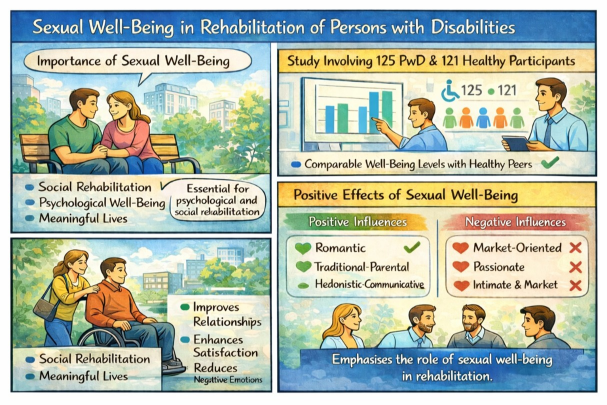
The article introduces the genetic connection between the synthetic multiple-factor activity-based personality-oriented neosocial model of rehabilitation of a person with disabilities by A. Shevtsov and the structural functional model of human sexuality by V. Hupalovska. In the multiple-factor model of rehabilitation, the socio-psychological component is important, which corresponds to the dispositional model of Allport and the provisions on the “fully functioning person” according to Rogers. An attempt to consider the self-actualisation of a person with a disability and his/her subjective well-being through the lens of sexual well-being as a factor in the social construction by the person with disability of his/her life at the internal level is made. The study investigates the role of sexual well-being as a factor contributing to the social and psychological rehabilitation of people with disabilities (PwD) who acquired lifelong severe somatic diseases. Based on a comparative empirical analysis involving 125 PwD and 121 conditionally healthy participants, it was found that sexual attitudes and subjective well-being in PwD are comparable to those of their healthy peers. Notably, PwD report higher levels of positive relationships and affect balance but encounter challenges in goal-setting due to their health limitations. Predictors of subjective well-being include the adoption of romantic, patriarchal, and traditional-parental sexual scenarios, while self-realisation, market-oriented, and passionate sexual scripts negatively influence subjective well-being. The study highlights that transcendental and hedonistic-communicative scripts enhance subjective satisfaction with life, while intimate and market scripts demonstrate an inverse relationship. These findings emphasise the importance of addressing sexual well-being in rehabilitation programs. Sexuality, functioning across physical, emotional, and spiritual dimensions, plays a crucial role in enabling PwD to construct meaningful lives and achieve subjective psychological balance. The research supports the integration of personal, social, and psychological factors into rehabilitation strategies, aligning with the neosocial model of rehabilitation.
Disclaimer: This image was generated using artificial intelligence and may contain inaccuracies or inconsistencies.
It is provided solely as a visual aid to facilitate the rapid understanding of the key ideas presented
in this article. Our editorial team conducts ongoing reviews of AI-generated images and will correct
or replace them whenever an error or discrepancy is identified or reported.
Authors:
Anamaria-Mădălina
Sabou
, Cristina
Anamaria Costescu
Abstract:
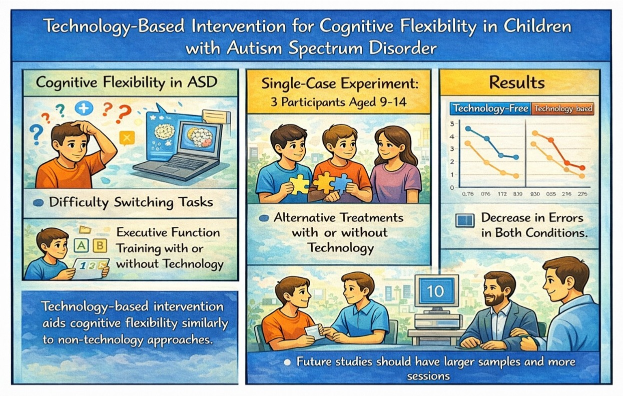
Cognitive flexibility is the most impaired executive function among children with autism spectrum disorder (ASD). Technology-mediated executive function training has several benefits for children with neurodevelopmental disorders. The aim of our study was to test the effectiveness of a digital intervention program to reduce errors in cognitive flexibility tasks in children ASD. To achieve our goal, we conducted a single-case experiment involving 3 participants with ASD aged between 9 and 14 years old. We used single-case experiment with alternative treatments to see if there are differences in cognitive flexibility when training was with or without technological tools. Based on the results, there was a decrease in the number of errors in both the technology-free and technology-based interventions, with no significant evidence of one intervention being more effective than the other. Future studies should include larger samples and increased number of intervention sessions.
Disclaimer: This image was generated using artificial intelligence and may contain inaccuracies or inconsistencies.
It is provided solely as a visual aid to facilitate the rapid understanding of the key ideas presented
in this article. Our editorial team conducts ongoing reviews of AI-generated images and will correct
or replace them whenever an error or discrepancy is identified or reported.
Authors:
Tetiana
Ulianova
, Nataliia
Naumenko
, Zoriana
Sprynska
, Myroslava
Kulesha-Liubinets
, Nataliia
Didyk
, Nina
Savchenko
Abstract:
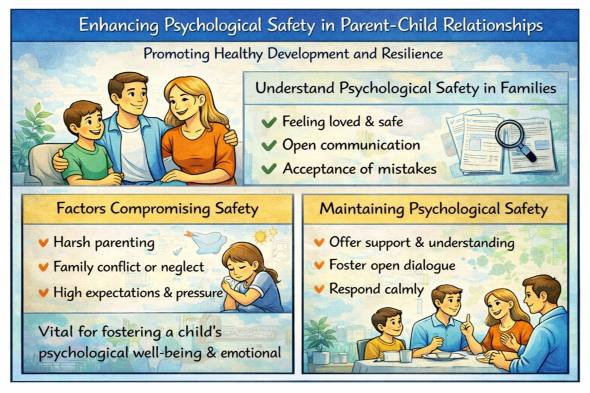
The article explores today’s approaches to understanding psychological safety within the family, focusing on the dynamics between parents and children. It emphasises key aspects of ensuring safety for children being raised within the family environment. The analysis includes factors that may compromise this safety, as well as strategies for maintaining it. Current research in psychological safety provides foundational approaches for studying personal safety within the family context. This issue is especially relevant when considering the development of a child’s psychological safety in the home. The article also addresses challenges in fostering a child’s psychological well-being within the family setting.
Disclaimer: This image was generated using artificial intelligence and may contain inaccuracies or inconsistencies.
It is provided solely as a visual aid to facilitate the rapid understanding of the key ideas presented
in this article. Our editorial team conducts ongoing reviews of AI-generated images and will correct
or replace them whenever an error or discrepancy is identified or reported.
Authors:
Nadia-Nicoleta
Morărașu
, Miruna-Maria
Morărașu
Abstract:
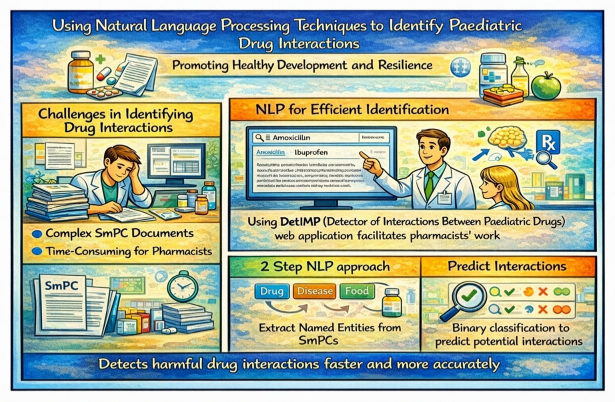
Drug interactions occur as a result of combining multiple drugs, while administering a drug in the context of pre-existing conditions or together with certain foods or beverages. The detection of drug interactions by physicians and pharmacists is essential to avoiding adverse drug reactions (ADR) among patients that can cause further deterioration of the patients’ health. This task is really time-consuming in Romania given that it requires examining each Summary of Product Characteristics (SmPC), which is a specialised drug-related document. In view of providing pharmacists with a technical solution for identifying the interactions between different paediatric drugs more rapidly and more efficiently, the research conducted in this paper by applying NLP techniques resulted in the design of a dedicated web application, named DetIMP (“Detector of Interactions between Paediatric Drugs”). Through DetIMP usage, the detection of interactions is achieved by a two-step approach: the extraction of medical Named Entities from SmPCs, followed by a binary classification to predict the existence of interactions in a given medical text.
Disclaimer: This image was generated using artificial intelligence and may contain inaccuracies or inconsistencies.
It is provided solely as a visual aid to facilitate the rapid understanding of the key ideas presented
in this article. Our editorial team conducts ongoing reviews of AI-generated images and will correct
or replace them whenever an error or discrepancy is identified or reported.
Authors:
Andreea
Ionita
Abstract:
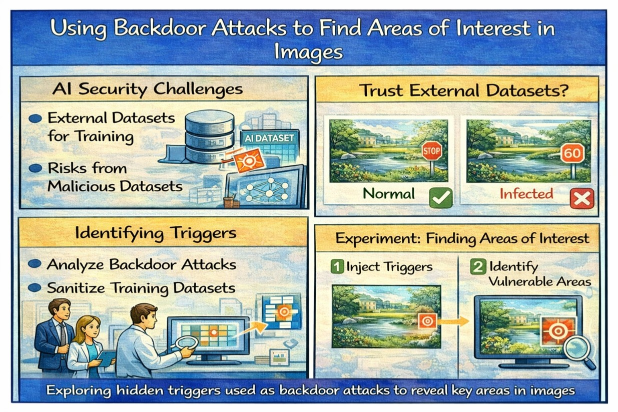
The power of neural networks increases in popularity more and more everyday. However, as for any powerful and popular tool, the security is hard to gain, here it is also the case. In recent years, backdoor attacks have become more and more popular through malicious parties, being risky for both organisations and people. In this paper we discuss the main methods of prevention against this type of attack. We also provide an experiment, with the help of which we tried to see what part of an image influences its classification. Therefore, using an algorithm for identifying backdoor attacks we made an experiment intended to find the interest zone in X-ray images.
Disclaimer: This image was generated using artificial intelligence and may contain inaccuracies or inconsistencies.
It is provided solely as a visual aid to facilitate the rapid understanding of the key ideas presented
in this article. Our editorial team conducts ongoing reviews of AI-generated images and will correct
or replace them whenever an error or discrepancy is identified or reported.
Authors:
Cristian
Niky Cumpătă
, Ilona
Mihaela Liliac
, Oprea
Valentin Bușu
, Anca
Mihaela Predescu
, Cătălina
Alexandra Iacov
, Alexandru
Dan Popescu
, Radu
Slăvoiu
, Elena
Cristina Andrei
, Cristina
Jana Busuioc
, Cristina
Maria Munteanu
Abstract:
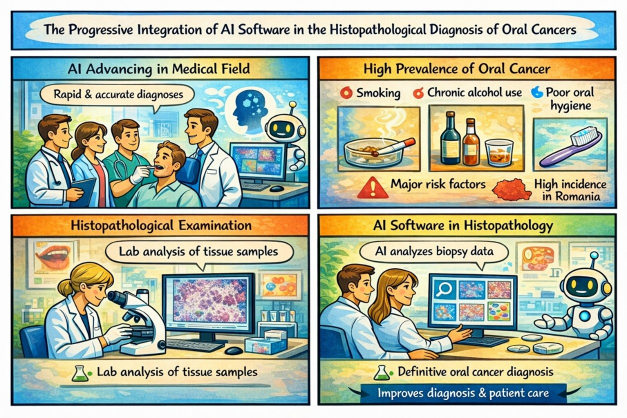
As in any other field, medicine is advancing and striving to adapt to increasingly complex demands, aiming to find rapid solutions in establishing certain diagnoses that can save or significantly improve the patient's quality of life. The integration of AI systems in the medical field is vital and requires openness, as well as a continuous desire for learning and improvement. Although the use of artificial intelligence in the medical field in Romania has not yet reached widespread development, there are still some AI software and applications that prove their effectiveness and ease the work of medical specialists. Oral cancer is one of the most common forms of malignant or premalignant lesions globally, with a high prevalence. Although developed countries are less affected compared to developing ones, they are also seeing an increasing incidence of cancers in the oro-maxillofacial region. The etiology of oral cancer is complex, influenced by both genetic and epigenetic factors. Currently, research is increasingly focused on epigenetic factors, including smoking, chronic alcoholism, diet, and improper use of mouthwash. These behaviours are associated with significant risks for the development of oral cancer, highlighting the importance of awareness and prevention within the global population. In Romania, factors such as low dental visit frequency, poor infrastructure, and lack of education contribute to disease prevalence. According to GLOBOCAN data, oral cancer in Romania ranks second in incidence, after leukemia, with a rate of 5.6 per 100,000 individuals. The purpose of our study is to highlight the importance of histopathological examination in establishing a definitive diagnosis, as well as the significance of AI software used in storing and processing the data obtained in the laboratory.
Disclaimer: This image was generated using artificial intelligence and may contain inaccuracies or inconsistencies.
It is provided solely as a visual aid to facilitate the rapid understanding of the key ideas presented
in this article. Our editorial team conducts ongoing reviews of AI-generated images and will correct
or replace them whenever an error or discrepancy is identified or reported.
Authors:
Besime
Uysal
, Huseyin
Bicen
Abstract:
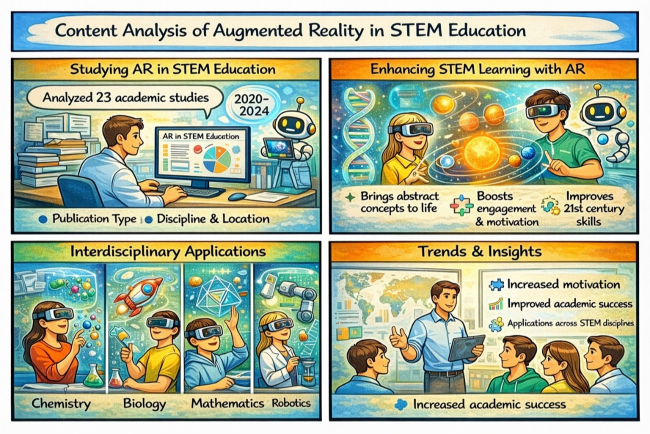
This study aims to comprehensively examine academic studies conducted on the use of augmented reality (AR) technology in STEM education in the last five years (2020-2024). A total of 23 studies were analysed in different dimensions such as publication type, year, location, number of authors, discipline and country. The main purpose of the research is to compile current literature on the use of AR in STEM education, determine trends in this field and guide future studies. In this way, educators, researchers and policy makers will have a more in-depth understanding of the use of AR technology in education and will be able to contribute to developments in this field. Augmented reality is a technology that revolutionises education by enriching learning experiences. Especially in fields where abstract concepts are intense such as STEM, AR enables students to better understand and apply these concepts. It also plays an important role in the development of 21st century skills such as problem solving, critical thinking and creativity. In this study, the data obtained from the Google Scholar database was examined using the content analysis method. The analysis results show that the use of AR in STEM education has attracted increasing interest, especially increasing students' motivation and positively affecting their academic success. In addition, applications and comparative analyses of AR in different STEM disciplines are also presented.
Disclaimer: This image was generated using artificial intelligence and may contain inaccuracies or inconsistencies.
It is provided solely as a visual aid to facilitate the rapid understanding of the key ideas presented
in this article. Our editorial team conducts ongoing reviews of AI-generated images and will correct
or replace them whenever an error or discrepancy is identified or reported.
Authors:
Oksana
Novytska
, Hlib
Romanchuk
, Oleksii
Vorobets
, Uliana
Zhornokui
, Liubov
Slyvka
, Valerii
Bohdan
Abstract:
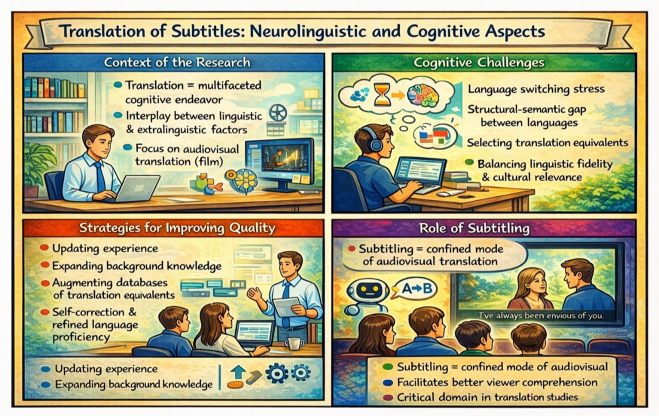
The present research delves into the intricate neurolinguistic and cognitive dimensions inherent in the translation of subtitles. Recognizing translation as a multifaceted cognitive endeavor, the study explores the interplay between linguistic and extralinguistic factors that significantly impact translation output quality. It underscores the paramount role of cognitive aspects in enhancing the comprehension of the translator’s work, delving into the processes governing human cognition during translation. Drawing from an interdisciplinary approach integrating insights from psychology, neuroscience, and linguistics, the research provides a comprehensive understanding of how translators navigate complex tasks such as meaning-making, context adaptation, and linguistic creativity. The study mainly focuses on audiovisual translation, considering film an intricate medium encapsulating diverse linguistic and visual elements. Subtitling, as a confined mode of translation within audiovisual content, emerges as a pivotal domain within translation studies. The research aims to shed light on the cognitive and neurolinguistic challenges translators face, emphasizing the critical role of subtitles in facilitating better viewer comprehension. Furthermore, the research explores stress factors impacting translators during language switching, the structural-semantic gap between languages, and the difficulties in selecting translation equivalents. The former recognizes the even balance between linguistic fidelity and cultural relevance, demanding heightened cognitive efforts from translators. To avoid these challenges, the study advocates for continual experience updating, expansion of background knowledge, and the augmentation of databases of translation equivalents. Stress management strategies, including self-correction and refined language proficiency, are identified as crucial tools for enhancing translation quality. In conclusion, this research contributes to the existing body of knowledge by unravelling the cognitive challenges of subtitle translation, providing valuable insights for practitioners specialized in translation studies.
Disclaimer: This image was generated using artificial intelligence and may contain inaccuracies or inconsistencies.
It is provided solely as a visual aid to facilitate the rapid understanding of the key ideas presented
in this article. Our editorial team conducts ongoing reviews of AI-generated images and will correct
or replace them whenever an error or discrepancy is identified or reported.
Authors:
Mădălina-Ioana
Ivanov
, Ana-Maria
Ghercă
, Larisa-Nicoleta
Gafencu
Abstract:
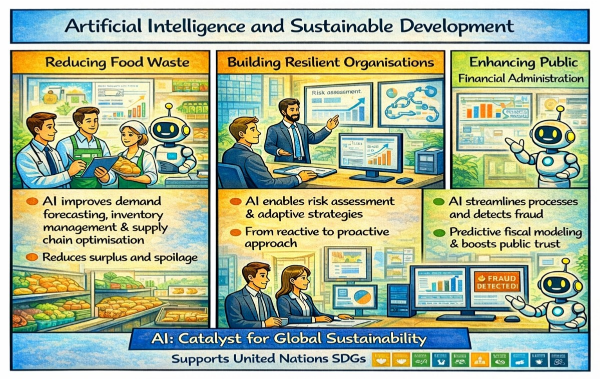
This paper explores the transformative impact of Artificial Intelligence (AI) across three critical areas: food waste reduction, organisational resilience, and public financial administration. By utilising AI technologies like machine learning, predictive analytics, and real-time monitoring, the study highlights how AI can address inefficiencies, enhance systemic resilience, and support global sustainability goals, including the United Nations SDGs. In food waste reduction, AI improves demand forecasting, inventory management, and supply chain optimisation, reducing surplus and spoilage. Examples like bakery demand forecasting and blockchain transparency demonstrate economic and environmental benefits. For organisational resilience, AI enables risk assessment and adaptive strategies, strengthening supply chains and helping organisations transition from reactive to proactive approaches during crises such as COVID-19. In public financial administration, AI streamlines processes, detects fraud, and enhances public trust through innovative platforms and predictive fiscal modelling, as shown in case studies from Finland, Australia, and China. Despite its potential, AI adoption faces challenges, including costs, data integration, ethical concerns, and unequal access. Overcoming these requires robust policies, collaboration, and capacity building. This research emphasises AI’s role as a catalyst for systemic change, advocating for ethical and inclusive adoption to advance sustainability, resilience, and equity in a complex world.
Disclaimer: This image was generated using artificial intelligence and may contain inaccuracies or inconsistencies.
It is provided solely as a visual aid to facilitate the rapid understanding of the key ideas presented
in this article. Our editorial team conducts ongoing reviews of AI-generated images and will correct
or replace them whenever an error or discrepancy is identified or reported.
Authors:
Iryna
Maidaniuk
, Olha
Donchenko
, Roman
Gurevych
, Valentina
Stets
, Victoriia
Naichuk
, Liudmila
Oliinyk
Abstract:
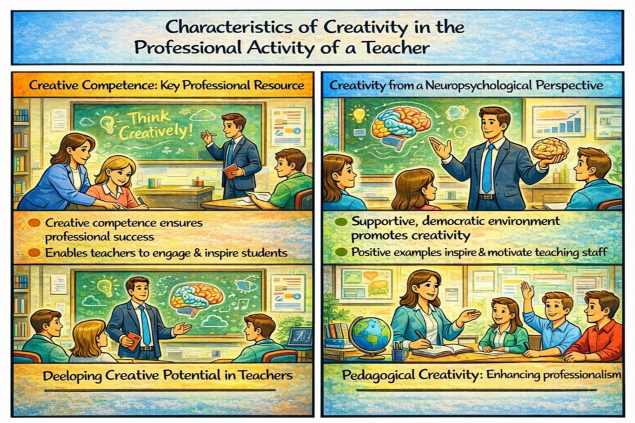
The article presents the analysis of creativity improvement as a determinant of the creative potential of a higher education institution teacher. Creative competence is one of the most important life resources that ensure the success of the professional activity of a modern teacher. The essence of the concept of creativity from the perspective of neuroscience is revealed, specifically of the neuropsychological approach. It is determined that creativity is an integrative formation, which includes a set of structural components that determine creative nature of human activity. Particular attention is paid to the importance of realisation of the creative potential of the teacher’s personality, and the emphasis is put on the importance of lack of over-regulation of the environment in the educational organisation, observance of democratic relations among the teaching staff and a positive example to follow a creative personality in order to develop creativity. Pedagogical creativity is a certain mental and social readiness of the individual, which allows changing the situation so that the teacher and the student can interact effectively in joint activities. Pedagogical creativity presupposes that the teacher has a high level of competence in interpersonal perception, interpersonal communication, and interpersonal interaction. Development of creative competence and creative individuality of the teacher contribute to the increase of their professional competence and professionalism in general.
Disclaimer: This image was generated using artificial intelligence and may contain inaccuracies or inconsistencies.
It is provided solely as a visual aid to facilitate the rapid understanding of the key ideas presented
in this article. Our editorial team conducts ongoing reviews of AI-generated images and will correct
or replace them whenever an error or discrepancy is identified or reported.
Authors:
Daniel-Costin
Ebâncă
, Cristina
Popîrlan
, Irina-Valentina
Tudor
Abstract:
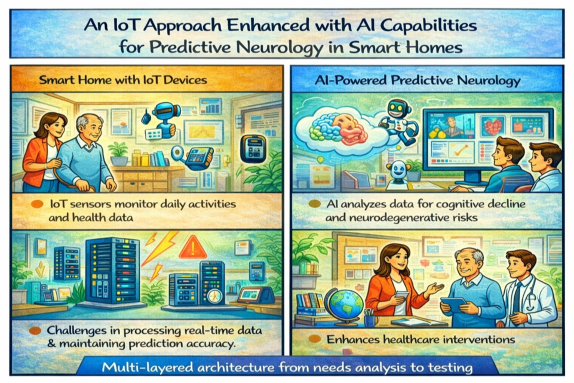
The integration of Artificial Intelligence (AI) and Internet of Things (IoT) offers remarkable chances for improving healthcare in smart home environments. In order to anticipate and observe neurological disorders, the study explores the use of IoT devices along with AI analytics. The goal is to identify early signs of any decline in cognitive functions or neurodegenerative conditions such as Alzheimer’s or Parkinson’s. The research emphasises on examining a framework for predictive neurology while it faces challenges associated with real-time data processing and prediction precision. The outcomes should result in a smart home ecosystem development that focuses on healthcare interventions and enhances life quality. This paper explores a multi-layered architecture, including an exploratory phase to analyse user needs, a developmental phase to design and integrate IoT devices, Machine Learning algorithms, and cloud architectures, as well as a validation phase to undergo rigorous testing in simulated environments to evaluate performance metrics.
Disclaimer: This image was generated using artificial intelligence and may contain inaccuracies or inconsistencies.
It is provided solely as a visual aid to facilitate the rapid understanding of the key ideas presented
in this article. Our editorial team conducts ongoing reviews of AI-generated images and will correct
or replace them whenever an error or discrepancy is identified or reported.
Authors:
Parameswaran
Sarvalingam
, Ashok
Vajravelu
, Janani
Selvam
, Asmarashid
Bin Ponniran
, Wan Suhaimizan
Bin Wan Zaki
, Kathambari
P
Abstract:
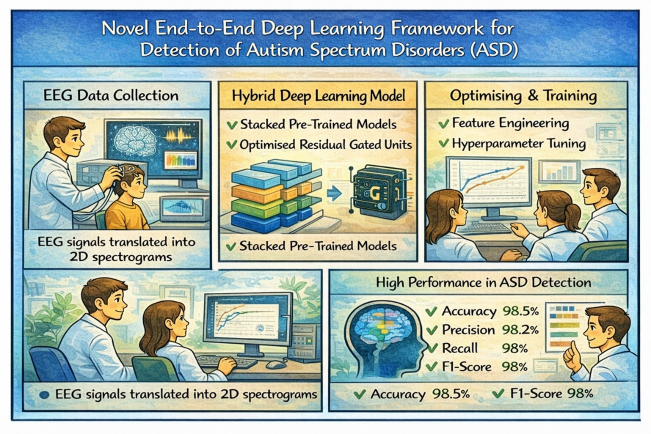
Autism Spectrum Disorder (ASD) is distinguished in detailed with diverse assemblage neural behaviours, diagnosed over the recent time of years. These ASD are developed using the increased internal connectivity among neural units of functional brain. Since Autism characteristics tend to occur over the months or even years, cognitive system for an early diagnosis of ASD is badly required to overcome the neural complexities of ASD with an accurate prediction. Electroencephalogram (EEG) is common technique for analysing brain’s electrical activity and widely used as the major tool for the gathering the neural information. Recent ensemble of EEG and Artificial Intelligence (AI) has thrown the brighter light in the ASD early prediction, but still computational overhead hurdles in achieving the highest performance. In this research article, novel deep learning framework that consist of hybrid combination of multiple tiers of pre-trained convolutional models and residual gated recurrent units with the hyper-parameters are tuned by the chaotic Cat swarm optimisation. As the first step, EEG signals are collected and translated into two-dimensional (2D) spectrograms followed by the pre-processing and feature engineering using the multi-scale stacked pre-trained models. Finally, the residual gated units are entangled for extracting the temporal features which are used to train the optimised classification networks. The proposed model is validated using EEG signals extracted from the 43 subjects and performance including accuracy, precision, recall and F1-score are measured then juxtaposed through the other cutting-edge learning models. The accuracy of detection is found to be 98.5%, precision was 98.2% recall was 98% and F1-score was 98% for the real time EEG subjects and also statistically proved its stability in handling the non-linear EEG datasets.
Disclaimer: This image was generated using artificial intelligence and may contain inaccuracies or inconsistencies.
It is provided solely as a visual aid to facilitate the rapid understanding of the key ideas presented
in this article. Our editorial team conducts ongoing reviews of AI-generated images and will correct
or replace them whenever an error or discrepancy is identified or reported.
Authors:
Iulian
Marius Furdu
, Simona
Elena Vârlan
, Grigor
Mihaylov
Abstract:
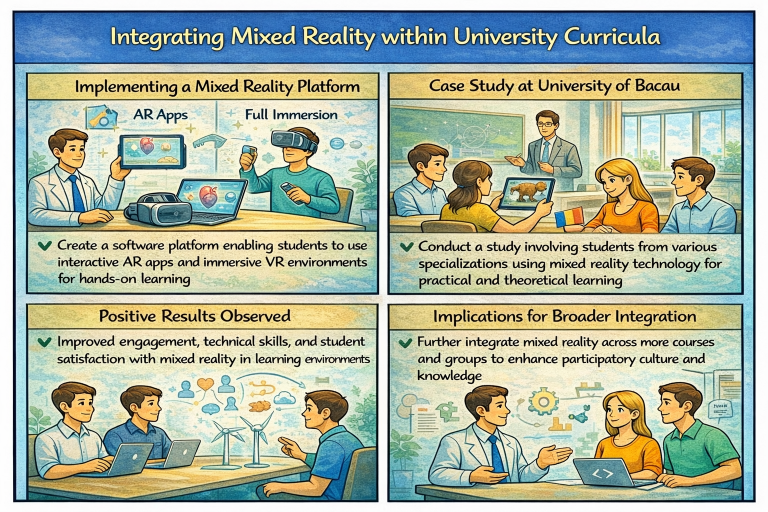
The paper describes the architecture and implementation of an experimental framework based on a software platform for enhancing practical and theoretical learning capacities among students in different fields of specialisation by using mixed reality. This platform allows students’ effective interaction with a set of experimental models in two ways: by using interactive augmented reality based mobile applications or by using complete immersion. A case study on using this platform within a target group of students from University of Bacău, Romania is provided and some implications of this teaching approach are analysed. The results have empirically proved that using a learning environment based on mixed reality in teaching improves participatory culture, technical knowledge, and learning satisfaction degree of students. This study also emphasises the need for improvements in the integration of this framework to ensure that the technology's use is not limited to specific courses or user groups.
Disclaimer: This image was generated using artificial intelligence and may contain inaccuracies or inconsistencies.
It is provided solely as a visual aid to facilitate the rapid understanding of the key ideas presented
in this article. Our editorial team conducts ongoing reviews of AI-generated images and will correct
or replace them whenever an error or discrepancy is identified or reported.
Authors:
Manana
Chumburidze
, Valer
Niminet
Abstract:
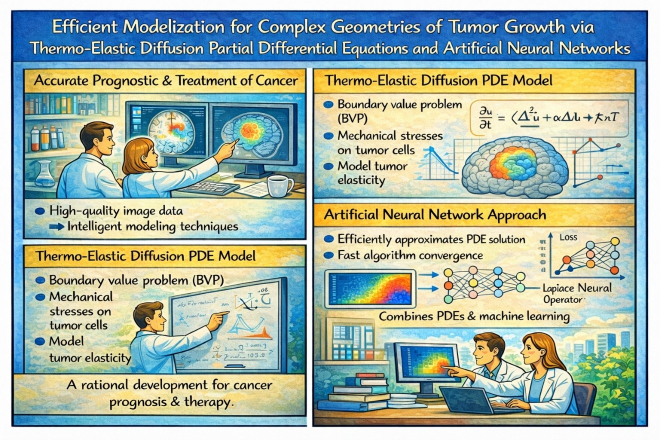
The availability of high quality image data urges the development of new conceptual techniques to realise cancer accurate prognostic and treatment. In this study we propose a boundary value problem to model tumor elasticity impacting various types of mechanical stresses on cancer cell properties, assuming isotropic and inhomogeneous condition. We show the solution of this multiscale model expressed by PDE is numerically approximated by means of an Artificial Neural Network Architecture based on generalised Fourier decomposition. The connective key step is the use of the Laplace Neural Operator, which contributes to an efficient algorithm convergence rate. While further research of this model may address critical points on machine learning optimality checks, this framework is a rational development for oncologic medical prognosis and therapy.
Disclaimer: This image was generated using artificial intelligence and may contain inaccuracies or inconsistencies.
It is provided solely as a visual aid to facilitate the rapid understanding of the key ideas presented
in this article. Our editorial team conducts ongoing reviews of AI-generated images and will correct
or replace them whenever an error or discrepancy is identified or reported.
Authors:
Roman
Gakh
, Roman
Tsykvas
, Eduard
Maliar
, Serhii
Korniienko
, Borys
Khomulenko
Abstract:
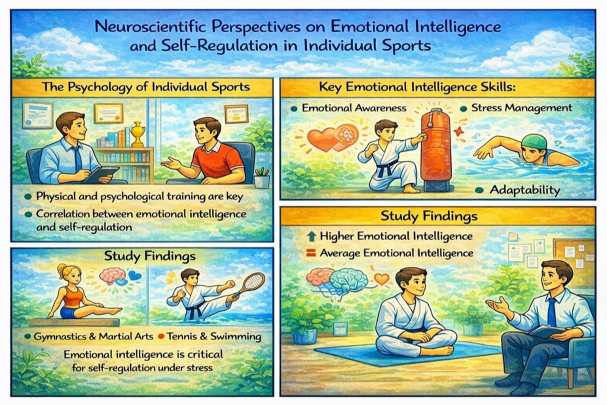
Sports achievements in contemporary conditions rely not only on physical training but also on integrating innovative psychological training methods. This article aims to analyse the connection between emotional intelligence levels and self-regulation skills in athletes engaged in individual sports. A correlational research design was employed, making it ideal for examining the relationship between emotional intelligence and self-regulation in individual sports. This approach allowed for the analysis of real sports scenarios, using statistical tools to summarise empirical findings, and applying comparison methods to highlight differences. Findings reveal that athletes in individual sports generally exhibit average emotional intelligence, reflecting moderate adaptability to extreme professional situations. The highest levels of emotional intelligence are observed in gymnasts and martial arts practitioners. Athletes in tennis and swimming demonstrate average levels. Those engaged in karate and swimming display superior emotional awareness and empathy. The data also confirm that emotional intelligence is a critical predictor for self-regulation under stress. Key components of emotional intelligence include emotional awareness, stress management, and adaptability. Practical applications for enhancing emotional intelligence involve developing specialized programs, providing individual psychological support, and integrating psycho-emotional training with general athletic programs.
In conclusion, the study underscores the importance of fostering psychologically resilient environments to enable athletes to achieve their goals effectively.
Disclaimer: This image was generated using artificial intelligence and may contain inaccuracies or inconsistencies.
It is provided solely as a visual aid to facilitate the rapid understanding of the key ideas presented
in this article. Our editorial team conducts ongoing reviews of AI-generated images and will correct
or replace them whenever an error or discrepancy is identified or reported.
Authors:
Vlad
Ionuț Stegariu
, Cătălin
Constantin Condrea
, Cătălina
Maria Astanei
, Beatrice
Aurelia Abalașei
Abstract:
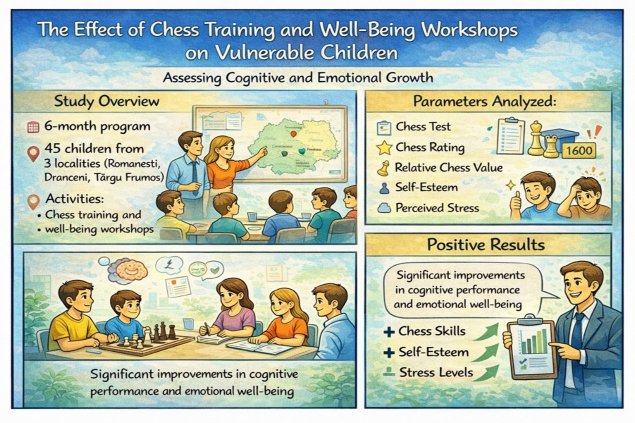
This study followed the evolution of the cognitive and psychological performance of a group of 45 subjects from three localities (Romanesti, Dranceni, and Târgu Frumos) during an intervention program carried out for six months. The programme included chess activities and workshops to improve well-being, with the aim of analysing significant changes at the level of five parameters: chess test, chess rating, chess relative value, self-esteem, and perceived stress. The results obtained highlight statistically significant improvements in all five variables studied, indicating an increase in cognitive performance and chess skills, as well as a decrease in the level of perceived stress, along with a strengthening of self-esteem. The comparative analysis between the initial and final values suggests the effectiveness of the activities implemented within this intervention plan, highlighting the positive impact of chess and well-being-centered approaches on the cognitive and psychological development of the participants. These results support the integration of chess and wellness-oriented workshops into educational and personal development programs, with the potential to improve cognitive performance and reduce stress among young people.
Disclaimer: This image was generated using artificial intelligence and may contain inaccuracies or inconsistencies.
It is provided solely as a visual aid to facilitate the rapid understanding of the key ideas presented
in this article. Our editorial team conducts ongoing reviews of AI-generated images and will correct
or replace them whenever an error or discrepancy is identified or reported.
Authors:
Paniel
Reyes Cárdenas
, Jorge
Alejandro Flórez
Abstract:
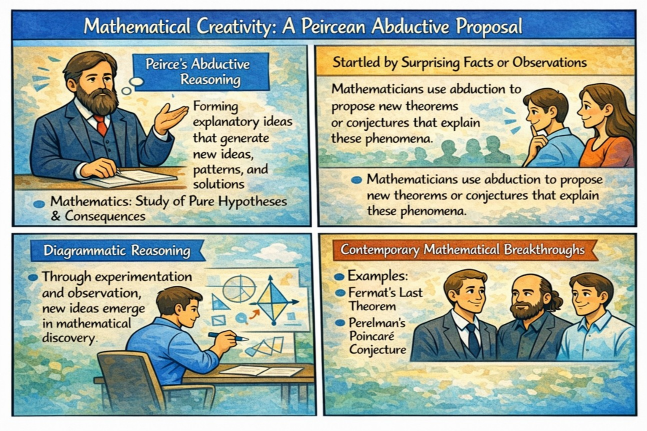
This paper explores mathematical creativity through the lens of Charles Sanders Peirce's concept of abductive reasoning. Peirce, who defined mathematics as the study of pure hypotheses and their consequences, saw abduction as the process of forming explanatory hypotheses, the only logical operation that introduces new ideas. We argue that mathematical creativity, with its focus on generating novel and meaningful ideas, patterns, and solutions, is intrinsically linked to abduction and takes place through diagrammatic reasoning. Mathematicians, faced with surprising facts or observations, engage in abductive reasoning to propose new theorems or conjectures that explain these phenomena. This creative leap, going beyond deductive and inductive reasoning, lies at the heart of mathematical discovery. We illustrate this process with examples from contemporary mathematics, including Wiles' proof of Fermat's Last Theorem and Perelman's resolution of the Poincaré Conjecture. Furthermore, we connect Peirce's notion of diagrammatic reasoning to mathematical creativity, highlighting the role of experimentation and observation in this process. Finally, we link our approach to Fernando Zalamea's advocacy for a "synthetic philosophy of contemporary mathematics" that engages directly with the creative practices of mathematicians.
Disclaimer: This image was generated using artificial intelligence and may contain inaccuracies or inconsistencies.
It is provided solely as a visual aid to facilitate the rapid understanding of the key ideas presented
in this article. Our editorial team conducts ongoing reviews of AI-generated images and will correct
or replace them whenever an error or discrepancy is identified or reported.
Authors:
Valentyna
Voloshyna
, Roman
Popeliushko
, Liudmila
Romanovska
, Tetiana
Kravchyna
, Kateryna
Oliynyk
, Yuriy
Popyk
Abstract:
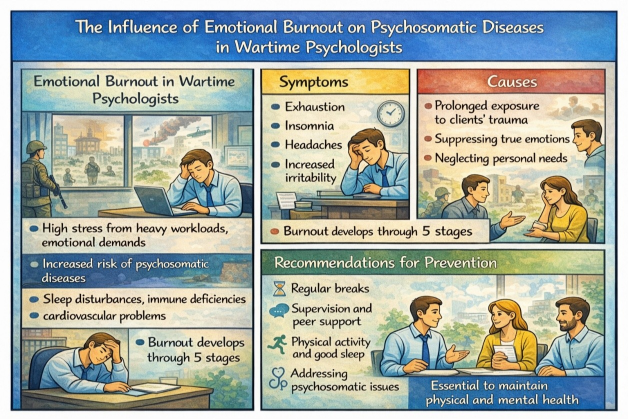
The article explores the theoretical basis of the impact of emotional burnout on the development of psychosomatic diseases of psychologists working in wartime conditions. Its objective is to examine the psychosomatic, psychological and neuropsychological aspects of emotional burnout among consulting psychologists. A review of literature from the past five years was conducted using multiple databases. The findings confirm that psychologists are highly susceptible to burnout due to prolonged interaction with numerous clients, requiring them to express emotions that may not align with their true feelings. In wartime, this challenge intensifies as psychologists face pathological stress from increased workloads, heightened emotional demands, and "psychological volunteering." Many neglect their own needs and personal lives to prioritise professional responsibilities. The study investigates the causes of burnout and its role in developing psychosomatic disorders. It identifies the psychophysical and socio-psychological symptoms of burnout and analyses the process using a five-stage model. Recommendations for burnout prevention are provided, emphasising physical and mental health maintenance, as well as the treatment of psychosomatic conditions. The article concludes that psychologists in military settings are at elevated risk of emotional burnout, which undermines emotional stability, self-esteem, and interest in work, reducing professional effectiveness. Burnout can also lead to physical health issues, such as sleep disturbances, immune deficiencies, cardiovascular problems, and other psychosomatic conditions, highlighting the urgent need for preventive measures.











 ▲