Disclaimer: These images were generated using artificial intelligence and may contain inaccuracies or inconsistencies.
They are provided solely as a visual aid to facilitate the rapid understanding of the key ideas presented
in these article. Our editorial team conducts ongoing reviews of AI-generated images and will correct
or replace them whenever an error or discrepancy is identified or reported.
Articles
Disclaimer: This image was generated using artificial intelligence and may contain inaccuracies or inconsistencies.
It is provided solely as a visual aid to facilitate the rapid understanding of the key ideas presented
in this article. Our editorial team conducts ongoing reviews of AI-generated images and will correct
or replace them whenever an error or discrepancy is identified or reported.
Authors:
Andreia
Gabriela Andrei
, Mara
Mațcu-Zaharia
, Dragoș Florentin
Mariciuc
Abstract:
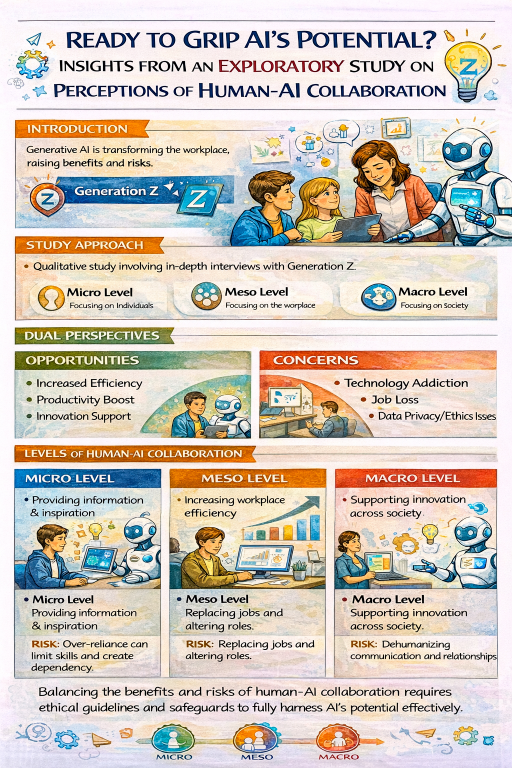
One of the emerging technologies arising with Industry 4.0 is generative artificial intelligence (AI). Despite its disruptive nature and controversies, the effective and ethical use of AI is increasingly preoccupying organizations of all sizes as well as their employees. Focusing on generative AI, this paper presents findings from a qualitative study that provides insights into how Generation Z, the newest workforce, perceives human-AI collaboration. Based on in-depth interviews and a micro-meso-macro approach, the study reveals a dual perspective. Participants recognized the advantages AI brings, such as increased efficiency, productivity, and information availability. However, they were concerned about various risks such as: technology addiction, job loss, data privacy and ethical issues. At the micro level, generative AI was seen as beneficial for providing information and inspiration, but over-reliance could limit people's skills and create dependency. At the meso, organizational level, it could increase efficiency and productivity, but potentially replace jobs. At the macro, societal level, generative AI could support innovation but risks dehumanizing communication and relationships. Data privacy and ethics concerns were expressed at all three levels, indicating that a combination of institutional safeguards and awareness of data privacy and ethics at all levels is required to achieve the full benefits of generative AI. This would help organisations to capitalise on technological advances and support the development of ethical use of AI tools.
DOI: https://doi.org/10.18662/brain/15.2/560
Disclaimer: This image was generated using artificial intelligence and may contain inaccuracies or inconsistencies.
It is provided solely as a visual aid to facilitate the rapid understanding of the key ideas presented
in this article. Our editorial team conducts ongoing reviews of AI-generated images and will correct
or replace them whenever an error or discrepancy is identified or reported.
Authors:
Gulsum
Asiksoy
, Didem
İslek
Abstract:
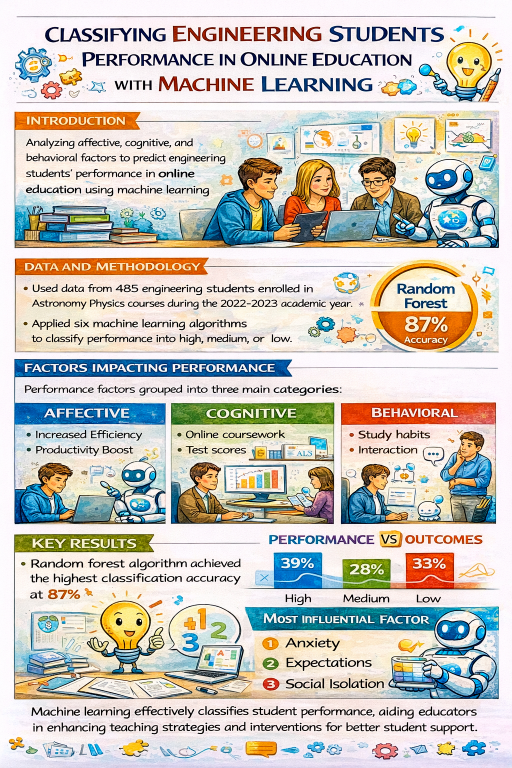
In the rapidly evolving online learning environment, accurate prediction of student performance plays an important role in improving the quality of education and overall student outcomes. This study investigated the effectiveness of machine learning algorithms in classifying student performance in online courses based on affective, cognitive, and behavioural factors to develop more effective teaching strategies and interventions to support student success. A dataset of 485 engineering students who took Astronomy Physics at a private university in the fall and spring semesters of 2022-2023 was used to train and evaluate six machine learning algorithms: Support vector machines (SVM), K-nearest neighbours (KNN), Naive Bayes (NB) classifier, logistic regression, decision tree, and random forest. The random forest algorithm achieved the highest classification accuracy (87%), correctly classifying 87% of students into one of three performance categories: high, medium, or low. Moreover, the study determined that anxiety and expectations are the most influential factors in increasing student performance in online courses, while the least effective feature is social isolation. The findings suggest that Machine learning can efficiently categorize student performance in online courses, even with a limited set of features, enabling educators to enhance teaching strategies and interventions for better student support.
Disclaimer: This image was generated using artificial intelligence and may contain inaccuracies or inconsistencies.
It is provided solely as a visual aid to facilitate the rapid understanding of the key ideas presented
in this article. Our editorial team conducts ongoing reviews of AI-generated images and will correct
or replace them whenever an error or discrepancy is identified or reported.
Authors:
Adela
Badau
Abstract:
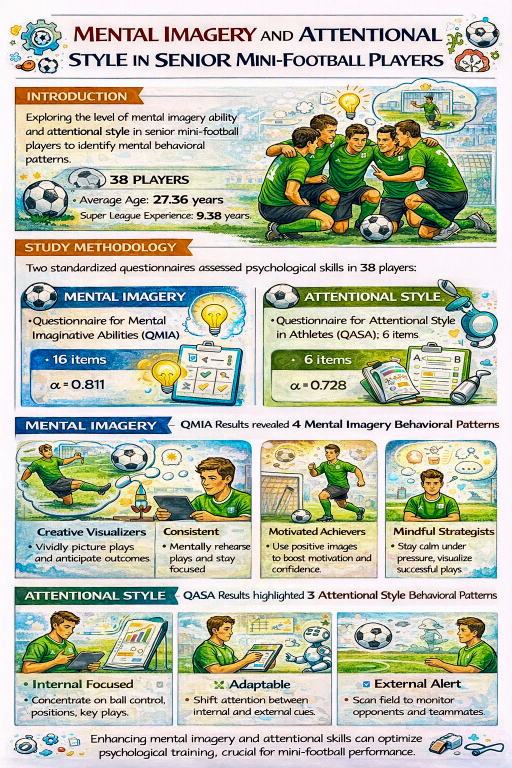
The purpose of this study was to determine the level of mental imagery ability and attentional style in senior mini-football players and to identify mental behavioral patterns. The study included a number of 38 senior mini-football players, with an average age of 27.36 years, with a playing experience in the super league of 9.38 years. In the study, two standardized questionnaires were applied, one aimed at identifying the level of mental imagery called the Questionnaire for the Assessment of Mental Imaginative Abilities in Athletes (QMIA) with 16 items and one for identifying the attentional style with the aim of determining internal or external dimensions, called the Questionnaire for Assessment of the Attentional Style in Athletes (QASA) with 6 items, structured in two subscales A and B. The calculated reliability of the questionnaire: QMIA had the Cronbach's α value of 0.811 and QASA registered a good reliability evidenced by Cronbach's α of 0.765 for the entire questionnaire; the internal attentional subscale of 0.728, and for the external attentional subscale of 0.726. After analyzing the results, a good level of mental imagery was found that can be perfected, identifying four behavioral patterns. The attentional style highlighted an internal dimension, which highlighted 3 behavioral patterns. At the level of senior mini-football players, in addition to physical, technical and tactical training, psychological training plays an essential role. Cognitive abilities regarding mental imagery and attention are psychological foundations whose development contributes to obtaining significant sports performances in the mini-football game.
Disclaimer: This image was generated using artificial intelligence and may contain inaccuracies or inconsistencies.
It is provided solely as a visual aid to facilitate the rapid understanding of the key ideas presented
in this article. Our editorial team conducts ongoing reviews of AI-generated images and will correct
or replace them whenever an error or discrepancy is identified or reported.
Authors:
Svitlana
Boroditsa
, Tetiana
Skuratko
, Olena
Vovk
, Kateryna
Yesypovych
, Iryna
Volkova
, Olga
Maslo
Abstract:
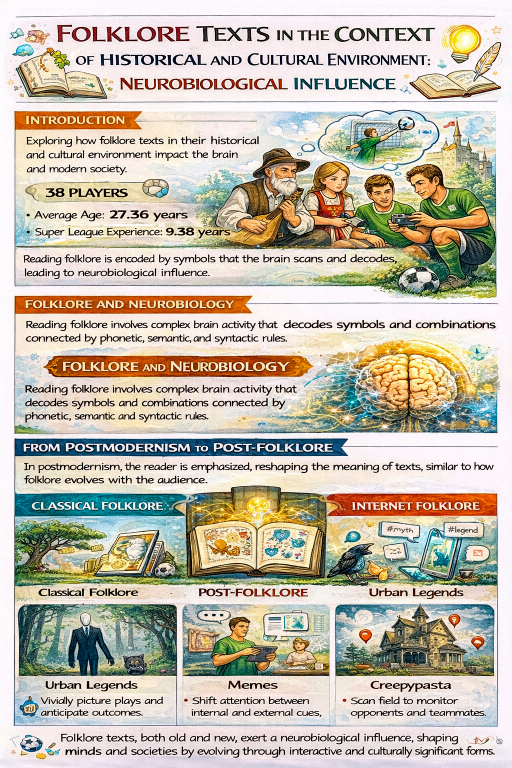
The article clarifies the basic definitions of current folklore science, defines the range of terminological borrowings from the conceptosphere "postmodernism". The article considers the term post-folklore as having a neurobiological influence, since reading works of post-folklore is a complex neurophysiological process during which the brain scans and decodes symbols and their combinations connected by phonetic, semantic and syntactic rules, discovering the meaning encoded in them, including modern urban folklore and a fundamentally new type of folk art - Internet folklore (netlore). The possibility to describe folklore phenomena in terms of post-, analogy with postmodern phenomena, has certain grounds. Thus, the postmodern exaltation of the reader, which destroys the precedence of meaning and constitutes the latter in the process of reading, finds correspondence in the multivariantism of folklore. Since postmodernism and post-folklore are united by chronological frameworks, we consider literary and folklore texts in the context of historical and cultural environment in which they appeared, we find their neuroinfluence on the personality. The analysis of the postmodern discourse shows that an important principle of its principle is the neuroinfluence in acquaintance with the works of folklore, the interactive code. New forms of disseminating and receiving information in today's society determine new forms of its non-specialized - folklore - translation.
Disclaimer: This image was generated using artificial intelligence and may contain inaccuracies or inconsistencies.
It is provided solely as a visual aid to facilitate the rapid understanding of the key ideas presented
in this article. Our editorial team conducts ongoing reviews of AI-generated images and will correct
or replace them whenever an error or discrepancy is identified or reported.
Authors:
Yuliia
Chystovska
, Andrey
Kernas
, Myroslava
Kulesha-Liubinets
, Natalia
Kovalenko
, Maryna
Fedorenko
, Olena
Medianova
Abstract:
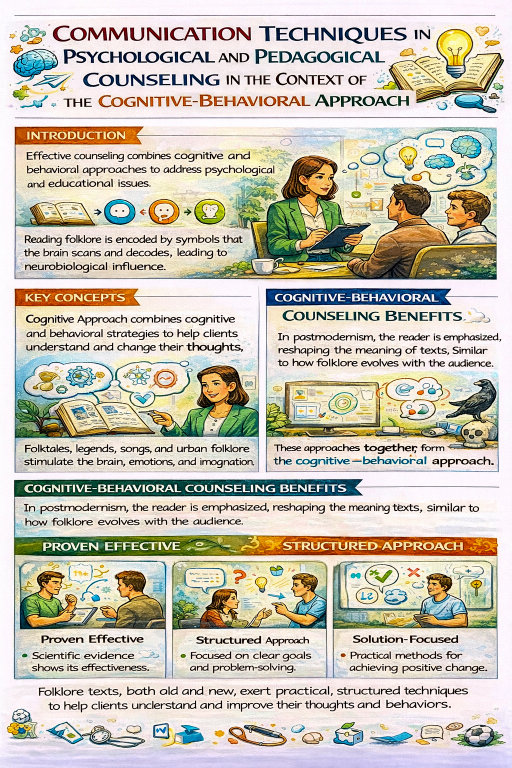
The article reveals the importance of psychological counseling - competent assistance of a psychologist to one or more clients in finding solutions to problems, taking into account the peculiarities of the psyche and ways of professional or personal improvement. Important in counseling behavioral and cognitive approaches. In the early stages of development, human and cognitive approaches develop separately from each other, but already in the first theories of human knowledge it is possible to explore motives for organizing knowledge: indeed, the use of cognitive processes is necessary to change behavior - this view is already heard in Tolman's concept of "cognitive maps". Note that psychologists also focus on the need for action at a higher level. Today's theories deal with cognitive and behavioral processes, so they often emphasize a unified cognitive-bihevioral approach rather than on two separate parts. The article provides concepts and describes the principles of the cognitive-bihevioral approach; defines the tasks of psychotherapy and counseling according to the humanistic approach; presents categories of irrationality of opinions in the context of the cognitive-bihevioral approach of counseling; offers communication techniques in psychological and pedagogical counseling in the context of the cognitive-bihevioral approach.
Disclaimer: This image was generated using artificial intelligence and may contain inaccuracies or inconsistencies.
It is provided solely as a visual aid to facilitate the rapid understanding of the key ideas presented
in this article. Our editorial team conducts ongoing reviews of AI-generated images and will correct
or replace them whenever an error or discrepancy is identified or reported.
Authors:
Cristina Anamaria
Costescu
, Adrian Nicolae
Opre
Abstract:
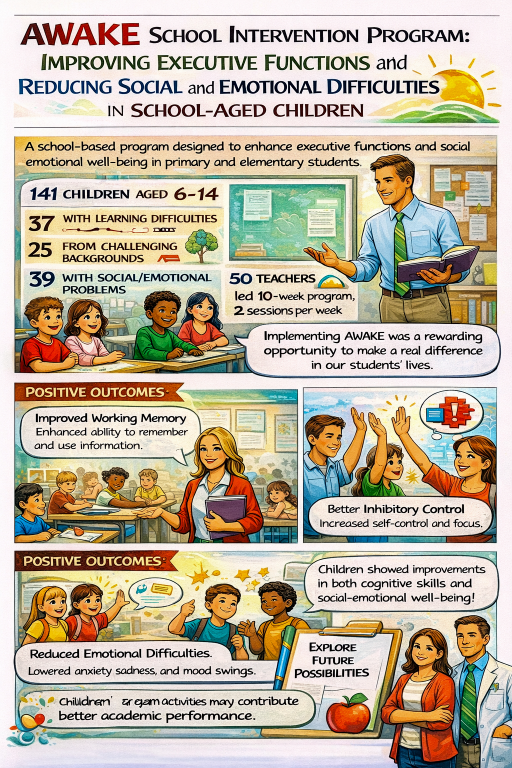
This paper reports the results from a school-based intervention for primary and elementary children evaluating the AWAKE project. The AWAKE intervention is a universal program that can be applied by teachers and is designed to improve children's executive functions and well as their social and emotional well-being. 141 children aged from 6 to 14 from Romania and Austria were involved in the study and 50 teachers implemented the intervention. Out of the 141 children 37 of them had some learning difficulties, 25 children had a difficult social background, and 39 of them had some social and emotional problems as identified by their teachers. The intervention program lasted for 10 weeks with sessions implemented twice a week. Our results showed that children improved their working memory, inhibitory control, planning and behaviour regulation. Moreover, they showed great reduction of their emotional problems, as well as decreased behaviour problems and increased social behaviours. Future studies should investigate the potential of such activities for improving children's academic performance, as well as the benefits of including them in the school curriculum.
Disclaimer: This image was generated using artificial intelligence and may contain inaccuracies or inconsistencies.
It is provided solely as a visual aid to facilitate the rapid understanding of the key ideas presented
in this article. Our editorial team conducts ongoing reviews of AI-generated images and will correct
or replace them whenever an error or discrepancy is identified or reported.
Authors:
Marius
Dumitrescu
Abstract:
The early Baroque, characterized by the skeptical spirit of the 16th century, reaches its peak in the following century with Descartes' hyperbolic doubt.
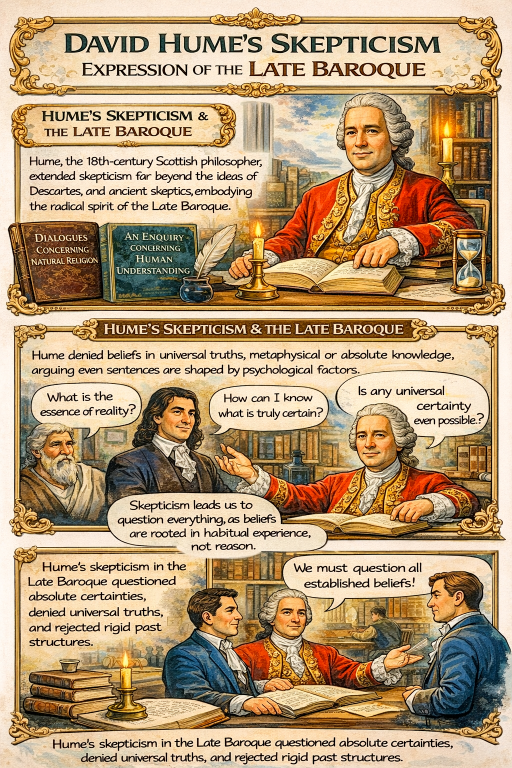
The purpose of this paper is to analyze two of Hume's works, Dialogues Concerning Natural Religion and An Enquiry Concerning Human Understanding in order to place the philosopher in the tradition of Baroque thought.
First of all, we will show that David Hume pushed skepticism far beyond its ancient or Cartesian limits, attacking even our way of formulating sentences, which is a subjective one, the result of some psychological factors that cannot be the basis of science. Secondly, we will demonstrate that Hume's skepticism belongs to the late Baroque and is, by its radical character, a form of metaphysical denial of any universal certainties.
In conclusion, Hume's skeptical spirit, manifested in relation to the authority constructed by the post-Westphalian ideology, overcame the past, which was at the time denied, and represents, from a philosophical point of view, the origin of the revolutionary spirit of the second half of the 18th century.
Disclaimer: This image was generated using artificial intelligence and may contain inaccuracies or inconsistencies.
It is provided solely as a visual aid to facilitate the rapid understanding of the key ideas presented
in this article. Our editorial team conducts ongoing reviews of AI-generated images and will correct
or replace them whenever an error or discrepancy is identified or reported.
Authors:
Pia-Simona
Fagaras
, Liliana-Elisabeta
Radu
, Ileana-Monica
Popovici
, Ion-Sebastian
Enache
, Cristian-Mihail
Rus
Abstract:
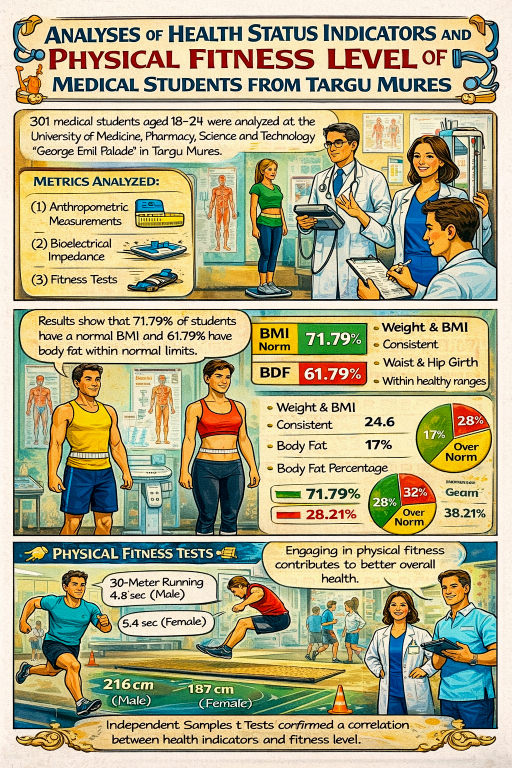
The current paper summarizes the health status correlated with physical fitness of students from the University of Medicine, Pharmacy, Science and technology "George Emil Palade" from Targu Mures. A total of 301 university students aged between 18-24 years old voluntarily participated in the research. Health status and physical fitness level were investigated based on (1) anthropometric measurements (height, waist girth and hip girth); (2) bioelectrical impedance (body mass index, weight and body fat percentage); (3) fitness level (30m running speed, standing long jump, sit up, trunk extension). The data were processed with SPSS 22.0 for windows. Descriptive statistics, Independent Samples T Test and bivariate correlations were performed. Findings demonstrate normal limits in terms of BDI for 71.79% and 61.79% normal limits for body fat percentage according to age. Additionally, it was found associations between health indicators and physical fitness
Disclaimer: This image was generated using artificial intelligence and may contain inaccuracies or inconsistencies.
It is provided solely as a visual aid to facilitate the rapid understanding of the key ideas presented
in this article. Our editorial team conducts ongoing reviews of AI-generated images and will correct
or replace them whenever an error or discrepancy is identified or reported.
Authors:
Yuriy
Fedoryk
, Olga
Rudenko
, Nataliia
Sablina
, Hennadii
Moskalyk
, Andrii
Shymanovych
, Oleksandr
Danylchenko
Abstract:
The relevance of the article lies in the need to study the moral side of war and the mobilization of world resources in the context of educational philosophy. In the context of metaphysics, war has an anti-materialistic, spiritual meaning and is "a certain test for the nation", which can be a manifestation of artificial intelligence. It is during war that society fights for the highest principles of civilization, not for the state or its ambitious aspirations. Both war and heroic experience can awaken deep forces connected to the foundations of race. On the contrary, materialists, especially Marxists, saw the cause of wars solely in social-class inequality and the antagonistic confrontation "between labor and capital." At the same time, war in society is not just a phenomenon of armed struggle guided by politics, a way of achieving one's goals with the use of armed violence. It is followed by a change in the course of numerous social processes and the involvement of economic, ideological and other forces of society in the struggle. War tests the economic and organizational strength of every nation. Therefore, it is important to understand the war as provoking a moral shock in Ukraine and mobilizing world resources in the light of the philosophy of reason. Its impact on social development is associated with a significant disruption and change in the usual functions and nature of the existence of elements of this or that social organization.
Disclaimer: This image was generated using artificial intelligence and may contain inaccuracies or inconsistencies.
It is provided solely as a visual aid to facilitate the rapid understanding of the key ideas presented
in this article. Our editorial team conducts ongoing reviews of AI-generated images and will correct
or replace them whenever an error or discrepancy is identified or reported.
Authors:
Vlad
Ghizdovat
, Lucian
Dobreci
, Adina Camelia
Slicaru
, Mihaela-Alina
Cristuta
, Dan Gheorghe
Dimitriu
, Cipriana
Stefanescu
, Decebal
Vasincu
, Razvan-Vasile
Ababei
, Constantin
Volovat
, Maricel
Agop
, Lucian
Eva
, Simona Ruxandra
Volovat
Abstract:
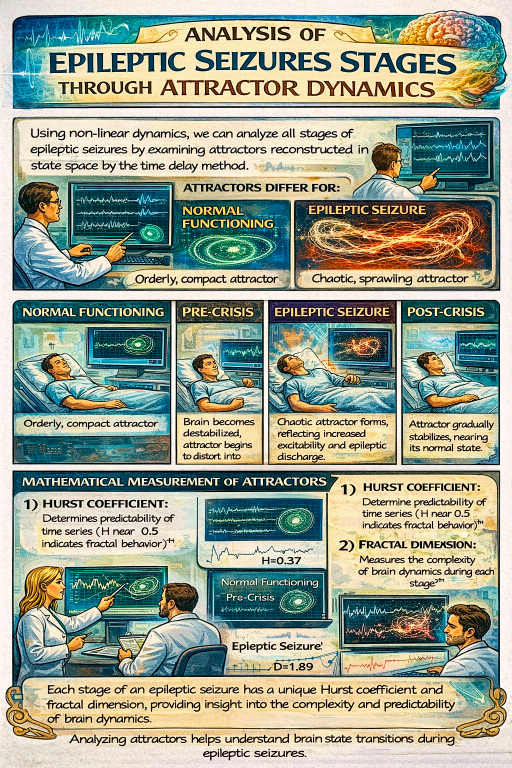
By employing mathematical procedures specific to non-linear dynamics, we devised a method for analyzing all the stages of an epileptic crisis. It can be seen that a specific attractor (reconstructed in the states space by time delay method) can be associated with each stage of the brain dynamics: normal functioning and epileptic crisis (pre-crisis, epileptic seizure, post-crisis). Moreover, since for each attractor a Hurst coefficient can be determined, we can state that each stage of an epileptic seizure can be characterized either by calculating the specific Hurst coefficient, or by calculating its fractal dimension.
Disclaimer: This image was generated using artificial intelligence and may contain inaccuracies or inconsistencies.
It is provided solely as a visual aid to facilitate the rapid understanding of the key ideas presented
in this article. Our editorial team conducts ongoing reviews of AI-generated images and will correct
or replace them whenever an error or discrepancy is identified or reported.
Authors:
Roman
Khavula
, Oksana
Chuyko
, Nataliia
Rodina
, Inokentii
Korniienko
, Zhanna
Bogdan
, Antonina
Kichuk
Abstract:
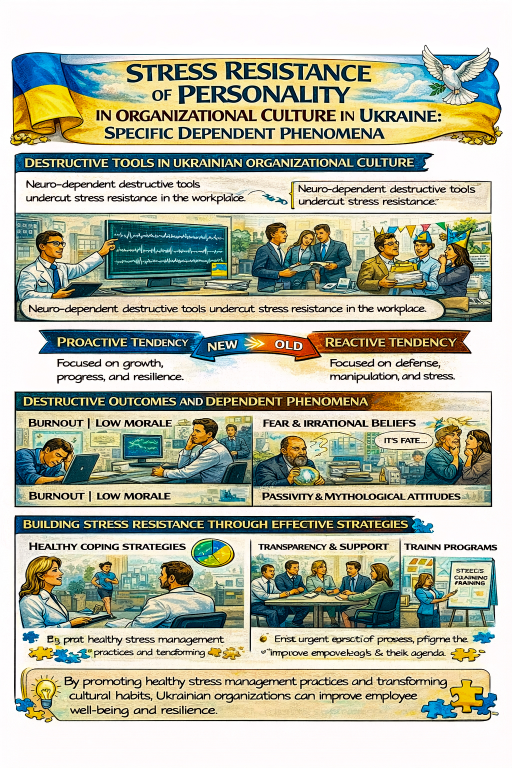
So far, the focus of safety psychology, coping strategies, and occupational safety has been predominantly on physical factors and self-regulation tools. However, this article outlines the poorly researched neuro-dependent phenomena of Ukrainian organizational culture, where parallel new proactive and old reactive tendencies are observed. The purpose of this article is to identify the main neurodependent destructive tools of deceptive psychological self-protection in the context of contemporary organizational culture. These phenomena proved to be dependent on both general and personal culture, through which the instincts of psychological self-preservation and primitive unconscious defenses such as shame, guilt, excessive responsibility, competition avoidance, mythological attitudes, rituals, etc. are refracted. Methods of sociological survey by means of posing provocative questions with short answer time, intervisional and independent observations of production teams (with the subsequent neurointerpretative analysis) allowed to make a number of important conclusions. The main ones are the objectification and explanation of two intensions of Ukrainian organization culture, the determination of neuro-markers of destructive manifestations of personal deontological culture and the conclusion of a systematizing table of the stages of development of organization culture with procedural-attributive and neurodestructive explication. Also in the conclusions by psychological and pedagogical modeling and expedient selection of tools the authors concluded a set of recommendations for the acquisition of stress resistance in the context of the culture of the organization. The article can become a theoretical basis for the development of effective training programs and non-invasive neuropsychological tools for the correction of neurocultural deviations.
Disclaimer: This image was generated using artificial intelligence and may contain inaccuracies or inconsistencies.
It is provided solely as a visual aid to facilitate the rapid understanding of the key ideas presented
in this article. Our editorial team conducts ongoing reviews of AI-generated images and will correct
or replace them whenever an error or discrepancy is identified or reported.
Authors:
Inna
Kivenko
, Olena
Moskaliuk
, Anna
Shapoval
, Tetiana
Burenko
, Bogdana
Kolodii
, Iryna
Lelet
Abstract:
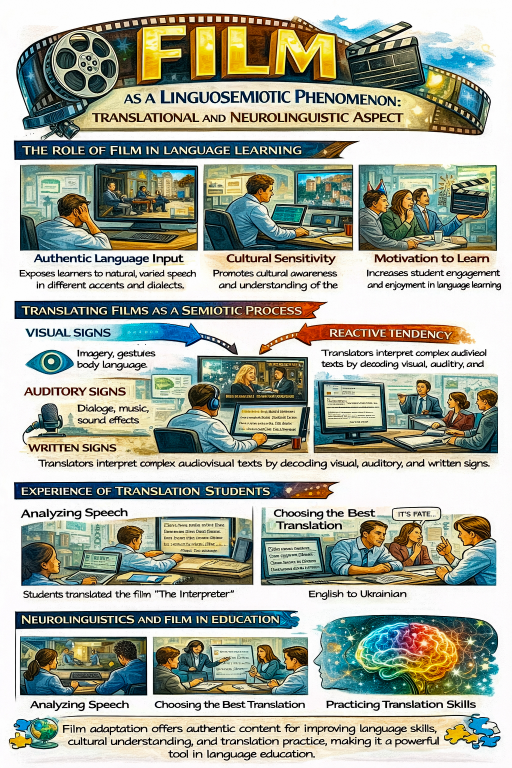
This study aims to study the potential of film as a semiotic and translational phenomenon for foreign language proficiency and translator training in the context of neurolinguistics. The article examines the theoretical foundations of the use of films in language education, focusing on the role of semiotics and translation in language learning and the didactic benefits of using films in the foreign language classroom. The research was carried out by reviewing the existing literature on audiovisual text and the peculiarities of its translation. It also presents an example of the experience of translation students who translated "The Interpreter" (Pollack, 2005a) from English to Ukrainian. The findings suggest that film adaptation for language learning has the potential to provide multiple benefits and can be a very effective tool in terms of developing communicative competence and translation skills as an aspect of neurolinguistics development. First, films can serve as a source of authentic and engaging language input, exposing learners to a variety of accents, dialects and registers of the target language. Second, films can promote cultural sensitivity and awareness by providing students with valuable information about the customs, traditions, and social norms of the target culture. In addition, movies are a manifestation of artificial intelligence and can support students' motivation and interest in language learning, as they are often strongly motivated to participate in watching movies in the target language.
Disclaimer: This image was generated using artificial intelligence and may contain inaccuracies or inconsistencies.
It is provided solely as a visual aid to facilitate the rapid understanding of the key ideas presented
in this article. Our editorial team conducts ongoing reviews of AI-generated images and will correct
or replace them whenever an error or discrepancy is identified or reported.
Authors:
Nikolaos
Mavritsakis
, Raul-Ioan
Muntean
, Vasile Emil
Ursu
, Razvan
Susan
, Monica
Susan
, Gina
Groza-Gogean
, Razvan Gheorghe
Rusu
, Dan
Boariu
, Cristina Maria
Man
, Elena
Ionescu
Abstract:
This research delves into the epidemiology, clinical manifestations, and management of hyperprolactinemia, particularly focusing on prolactin-secreting pituitary adenomas, or prolactinomas, in Dolj County, a region historically underrepresented in medical literature. Hyperprolactinemia, a prevalent endocrine disorder, arises from excessive prolactin secretion by the pituitary gland's lactotrope cells and presents a diverse clinical picture. The most significant etiological contributors identified are prolactinomas, accounting for approximately 39% of all secretory pituitary tumors. In light of hyperprolactinemia's substantial morbidity and prevalence, this study underscores the necessity of comprehensive understanding of its regional epidemiology and clinical presentations. Our methodology incorporated collecting retrospective data across various medical facilities in Dolj, ensuing a meticulous analysis of clinical features, paraclinical investigation outcomes, and therapeutic responses among patients with prolactinomas. Emphasis was placed on discerning risk factors, demographic characteristics, and associated comorbidities to encapsulate the full spectrum of these tumors' impact within the community. Preliminary results suggest a nuanced incidence rate of prolactinomas within Dolj, with specific demographic and clinical trends potentially distinct from those reported in wider literature. These findings stress the critical role of localized studies in enhancing screening, diagnostic, and therapeutic protocols. Ultimately, this investigation offers critical insights into the epidemiology and symptomatology of prolactinomas in Dolj, significantly augmenting existing literature and informing regional medical practices.
Disclaimer: This image was generated using artificial intelligence and may contain inaccuracies or inconsistencies.
It is provided solely as a visual aid to facilitate the rapid understanding of the key ideas presented
in this article. Our editorial team conducts ongoing reviews of AI-generated images and will correct
or replace them whenever an error or discrepancy is identified or reported.
Authors:
Bogdana
Miclea
Abstract:
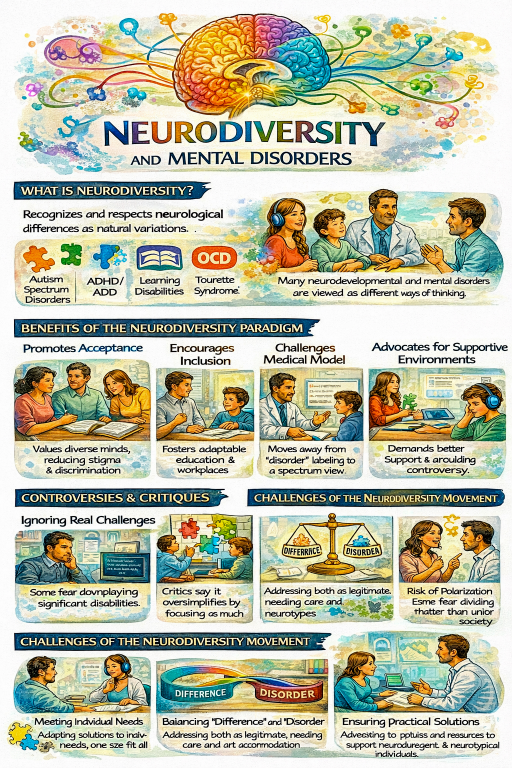
In recent years, the concept of neurodiversity has grown in popularity among the scientific and non-scientific communities dealing with autism and related conditions, included in neurodevelopmental disorders. According to this paradigm, identity becomes a neuroidentity, subjectivity is determined by cerebral functioning and cultural, social, spiritual expression is the result of this pattern of biological functioning. Most often, opinions focus on the immediate benefits of liberalizing thinking that allows for the reconfiguration of rigid psychopathological medical models in current diagnostic systems and favors the humanization of medicine. In this construct, reasonable and integrative at first glance, there are some persistent limitations, internal contradictions and shortcomings that lead to criticism and controversy. In conclusion, widespread expansion of the movement of neurodiversity risks generating, maintaining and amplifying social fracturing and individual alienation.
Disclaimer: This image was generated using artificial intelligence and may contain inaccuracies or inconsistencies.
It is provided solely as a visual aid to facilitate the rapid understanding of the key ideas presented
in this article. Our editorial team conducts ongoing reviews of AI-generated images and will correct
or replace them whenever an error or discrepancy is identified or reported.
Authors:
Viorel
Rotilă
Abstract:
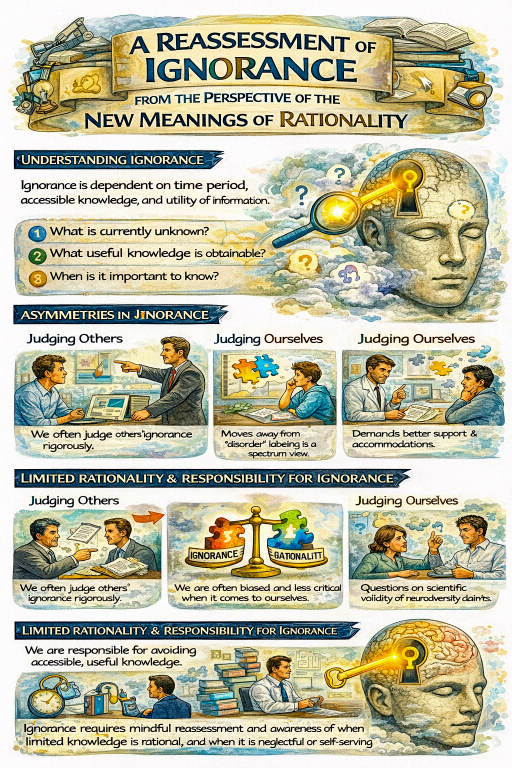
In this article, we take a view of ignorance in relation to the new meaning of rationality, including the specific perspectives of limited rationality. We begin by suggesting that the problem of ignorance is far from the implied clarity of everyday expression, and there is a risk of inappropriate use of the concept. We show that not understanding what ignorance is, is part of ignorance, trying to avoid the situation of ignorance over ignorance. We propose a definition of ignorance by reference to the possible accessible and useful knowledge at a given time, suggesting that the understanding of ignorance is dependent on three variables: time, knowledge accessible at each moment of the present and utility. We analyze some asymmetries, including the one caused by the fact that we are often rigorous (but, nevertheless, interested) judges of others ignorance and very biased (that is, somewhat ignorant) about ourselves. We assess responsibility for our own ignorance by suggesting some limitations to the forms of ignorance for which we are responsible. We suggest that some variants of the unknown meet the definition of ignorance, and if we consider that most human decisions are made in conditions of information poverty, we can find that ignorance is frequently part of our cognitive strategies. Ignorance can be intentionally included in some of our cognitive strategies, one of which is provided by the principle of cognitive economics. The article can be one of the starting points for a set of recommendations on what can be ignored, what should and should not be ignored, when we are ignorant with no considerable effect and where/when we should not be.
Disclaimer: This image was generated using artificial intelligence and may contain inaccuracies or inconsistencies.
It is provided solely as a visual aid to facilitate the rapid understanding of the key ideas presented
in this article. Our editorial team conducts ongoing reviews of AI-generated images and will correct
or replace them whenever an error or discrepancy is identified or reported.
Authors:
Alexandra Cristina
Rusu
, Raluca Ozana
Chistol
, Simona Irina
Damian
, Klara
Brînzaniuc
, Karin Ursula
Horvath
Abstract:
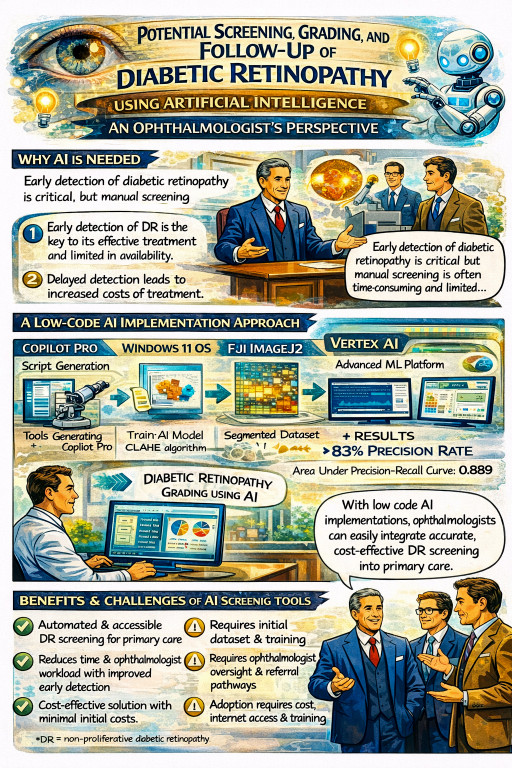
Diabetic retinopathy (DR) is a microvascular disorder caused by the long-term effects of diabetes mellitus and among the primary causes of blindness worldwide. Early detection of DR is the key to its effective treatment and subsequent reduction of associated economic burden, but manual screening is time-consuming and of limited availability. A highly sensitive and specific automatic diagnostic tool would significantly improve screening programs and allow referring for further evaluation and treatment in an ophthalmology clinic only patients with significant lesions or with changes between two successive evaluations. Several deep learning-based automated diagnosis tools have been proposed to aid screening but their implementation with minimal costs is not accessible to physicians with no coding knowledge. We aimed to develop a fundus images classification model with no coding knowledge by using generative artificial intelligence (AI) implemented in Windows 11 operating system under subscription (Copilot Pro), a free image analysis tool (Fiji ImageJ2), and Vertex AI, a machine learning (ML) platform launched by Google in 2021. For this purpose, we selected a total of 2961 labelled cases from the APTOS 2019 database of DR fundus images. Images were batch segmented using a Java ImageJ script generated by Copilot Pro and based on the Contrast Limited Adaptive Histogram Equalization (CLAHE) algorithm. Segmented images were used to train an automated ML classification model to detect DR severity (5 classes — no DR, mild non-proliferative DR, moderate DR, severe DR, proliferative DR). The model achieved an area under the precision-recall curve of 0.889, with a precision rate of 83.8% and a recall rate of 77%. In conclusion, generative AI implemented into Windows operating system together with a free imaging processing tool and Vertex AI allow ophthalmologists with no coding knowledge to benefit from publicly available image databases (thousands of cases) to develop accurate automated diagnostic tools. Such tools have the potential to facilitate screening especially in areas with few specialists.
Disclaimer: This image was generated using artificial intelligence and may contain inaccuracies or inconsistencies.
It is provided solely as a visual aid to facilitate the rapid understanding of the key ideas presented
in this article. Our editorial team conducts ongoing reviews of AI-generated images and will correct
or replace them whenever an error or discrepancy is identified or reported.
Authors:
Ihor
Shcherbak
, Viktoriya
Gigolayeva-Yurchenko
, Oksana
Krus
, Tetiana
Kryzhanovska
, Aryna
Frumkina
, Oksana
Komarovska
Abstract:
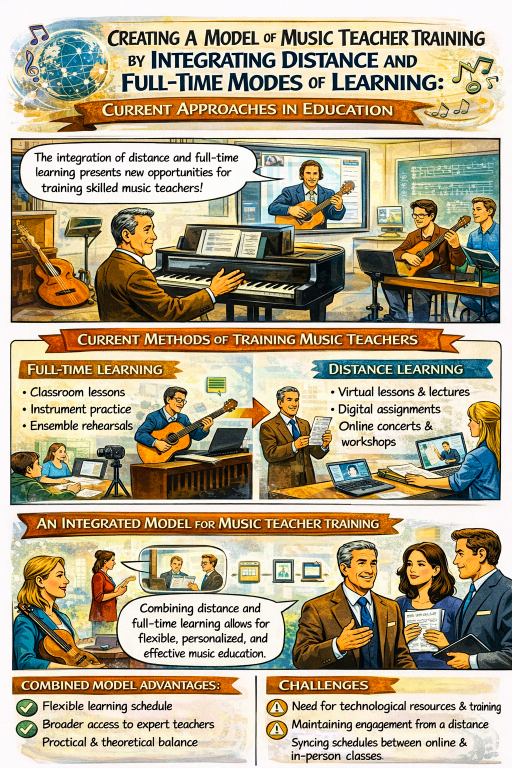
The study is devoted to the problem of the formation of mastery of music teachers based on the integration of distance and face-to-face learning as an aspect of neuropedagogy. This problem has not been studied in the scientific and methodological literature, although digital means of communication have long penetrated the sphere of musical and pedagogical education. The task of designing a model of professional music teacher training, which has changed due to the introduction of distance learning for future music teachers, remains relevant. In the course of the research, theoretical system-analytical methods were used, methodical materials and experience of university teachers were studied in the field of developing a model of teaching music students in conditions of integration of remote and full-time forms of work. In the context of the research, scientific research on neuropedagogy was analyzed, conceptual and categorical components of the research work were determined. The main focus of the study is related to the principles of building a model of professional training of a music teacher based on the integration of distance and full-time forms of education. In order to realize the research goal, the method of synthesis and analysis, integration, research, descriptive and scientific methods were applied. The method of generalization was used to determine the results of the research work, which formed an idea about the neuropedagogical essence of the formation of professional competence of a musician.
Disclaimer: This image was generated using artificial intelligence and may contain inaccuracies or inconsistencies.
It is provided solely as a visual aid to facilitate the rapid understanding of the key ideas presented
in this article. Our editorial team conducts ongoing reviews of AI-generated images and will correct
or replace them whenever an error or discrepancy is identified or reported.
Authors:
Corina
Simionescu
, Daniela
Marcu
, Marius Silviu
Măciucă
Abstract:
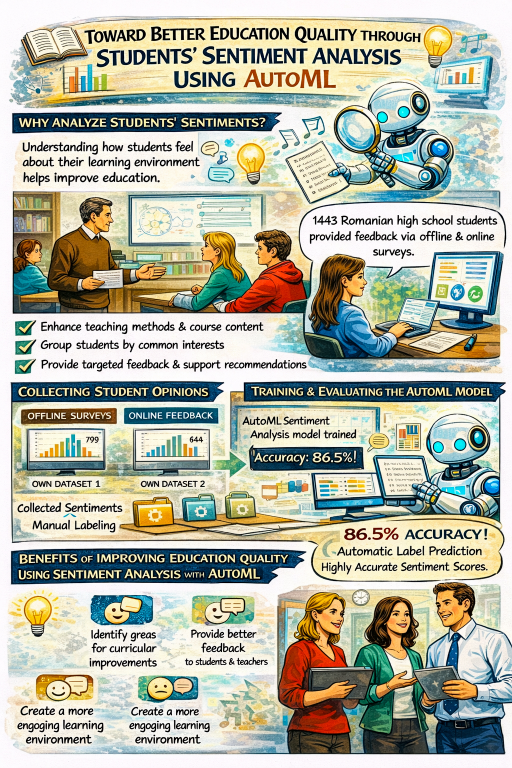
Sentiment analysis from students' interactions with learning environments is a topic of interest for researchers in the field of education because it can make important contributions to improving the quality of instructional processes through recommendation systems integrated into learning applications, or by improving the quality of courses, by grouping students according to their common interests and providing feedback on school progress. There are two approaches to sentiment analysis: one lexicon-based and another that uses machine learning. In this study, we present a sentiment analysis from two own data sets that represent students' opinions about school. Our goal is to create a model that helps us to automatically label students' opinions, assigning sentiment scores between 0 and 4 (0 for an extremely negative opinion). To train and evaluate the performance of the model, we used opinions collected from 1443 Romanian high school students. The novelty that we propose is the manual labeling system. Our current research which uses a machine learning approach to classify students' opinions obtains an accuracy of 86.507%.
Disclaimer: This image was generated using artificial intelligence and may contain inaccuracies or inconsistencies.
It is provided solely as a visual aid to facilitate the rapid understanding of the key ideas presented
in this article. Our editorial team conducts ongoing reviews of AI-generated images and will correct
or replace them whenever an error or discrepancy is identified or reported.
Authors:
Ioan
Susnea
, Emilia
Pecheanu
, Adina
Cocu
, Simona-Mirela
Susnea
Abstract:
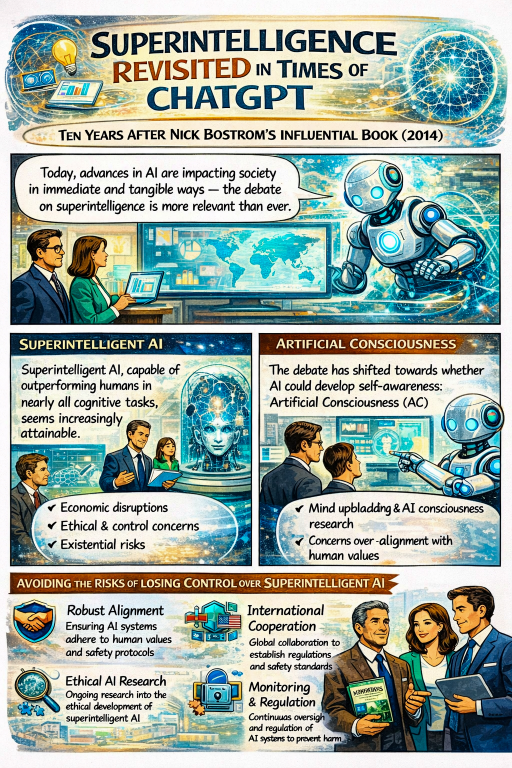
The paper discusses the prospects and risks associated with the development superintelligent artificial intelligence (AI) and artificial consciousness (AC) ten years after Nick Bostrom explored these ideas in his influential book (Bostrom, 2014). We argue that the debate about the evolution of AI has changed at least in the following aspects: First, the development of superintelligent machines is no longer limited to speculations about a distant future — recent advances in this field already produce immediate and palpable impact across various sectors, including education, business, and technology. Second, we argue that the debate on whether AI systems might one day achieve a form of artificial consciousness (AC) has shifted from a theoretical possibility to a pressing concern. After reviewing some of the most likely prerequisites for the development of potentially dangerous AI systems, we suggest several directions of action to avoid the risk of losing control over superintelligent AI.
Disclaimer: This image was generated using artificial intelligence and may contain inaccuracies or inconsistencies.
It is provided solely as a visual aid to facilitate the rapid understanding of the key ideas presented
in this article. Our editorial team conducts ongoing reviews of AI-generated images and will correct
or replace them whenever an error or discrepancy is identified or reported.
Authors:
Gabriela
Tomescu
, Monica-Iulia
Stănescu
, Kamer-Ainur
Aivaz
Abstract:
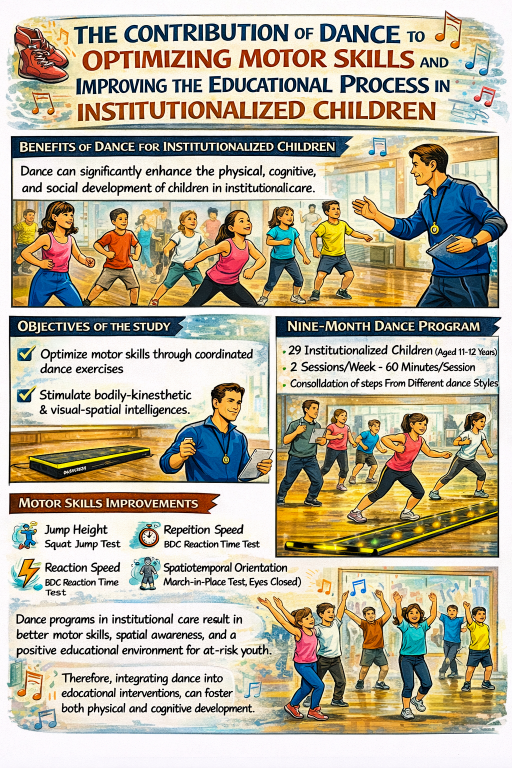
Institutionalized children represent a risk-factor category from the perspective of social integration. Educational interventions implemented in programs designed for children raised in foster homes verify the effectiveness of complex means of training that could influence their multidimensional development. Among these means, dance has been identified as a way of developing coordination, rhythmicity, motor skills, and spatiotemporal orientation through body movements. Starting from the hypothesis that the systematic participation of institutionalized children in a dance program contributes to the development of their motor skills, an intervention model based on dance content was designed for this study. The purpose of this research is to optimize the motor skills of institutionalized children and to stimulate their bodily-kinesthetic and visual-spatial intelligences. The objectives of the study are to highlight the influence of dance on the development of institutionalized children and to develop the methodological concept regarding the use of dance for institutionalized children at the age of preadolescence. The research was conducted over a nine-month period, with a frequency of two training sessions per week of 60 minutes each, and was based on the consolidation of steps from different dance styles for a group of 29 institutionalized children aged 11-12 years. Testing was carried out using the Optojump device, and the tests applied were aimed at assessing their lower limb power, reaction speed, repetition speed, and spatiotemporal orientation. The motor effects produced indicate positive changes in test values, with all results showing significant differences after nine months of participation in the dance program. The greatest impact is for the displacement point of the March in Place Eyes Closed 30 Seconds test, which reveals an improvement in spatial orientation ability. In conclusion, the participation of institutionalized children in a dance program contributes to the optimization of their motor skills and the stimulation of their bodily-kinesthetic and visual-spatial intelligences, therefore we consider it appropriate to deepen the study of dance as a means of developing multiple intelligences through educational programs implemented in schools.
Disclaimer: This image was generated using artificial intelligence and may contain inaccuracies or inconsistencies.
It is provided solely as a visual aid to facilitate the rapid understanding of the key ideas presented
in this article. Our editorial team conducts ongoing reviews of AI-generated images and will correct
or replace them whenever an error or discrepancy is identified or reported.
Authors:
Liliya
Tomich
, Nina
Kravets
, Olha
Barladyn
, Valentyn
Grushko
, Tetiana
Biriukova
, Halyna
Leshchuk
Abstract:
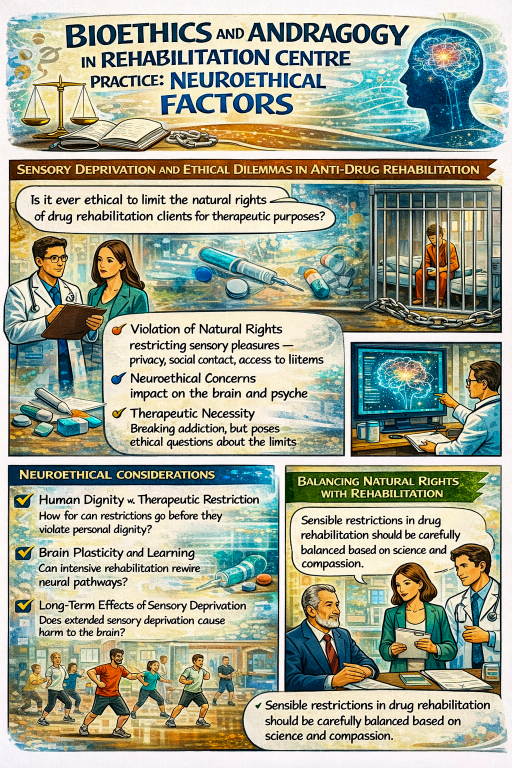
The article discusses whether sensory deprivation is suitable for clients undergoing anti-drug rehabilitation in a specialized centre, prompting discussion on the ethical considerations of partially violating natural rights. Its significance stems from the alarming increase in drug addiction, its widespread availability and the conflicting perspectives in terms of andragogy, bioethics and neuroethics. The latter is at the core of human identity. The article aims to analyze scientific views on the problem in question, reveal the neuro- and bioethical realities within individual rehabilitation centres, contrast them with the multi-faceted ethical considerations and evaluate the usefulness of limiting certain natural rights of the client (restricting sensory pleasure) for therapeutic reasons. Owing to the lengthy and isolated nature of rehabilitation, along with ethical concerns, the authors faced challenges in accessing information. Consequently, data collection relied primarily on andragogical observation and monitoring of clients' neurophysiological responses. Additionally, access was granted to centre staff journals, interviews and occasional client surveys. The analysis involved interpreting neurophysiological data without the use of equipment, consolidating survey data and assessing ethically significant matters concerning suitability and permissibility. The findings highlighted the relevance of ethical considerations surrounding intervention in both the human body and psyche, emphasizing that decisions are typically dictated by the specific therapeutic context. Consequently, the primary objective of the article is to bring awareness to rehabilitation specialists, medical practitioners and legal professionals about the importance of reaching a consensus between respecting human natural rights and the imperative to provide rescue, even during stages III-IV of addiction.
Disclaimer: This image was generated using artificial intelligence and may contain inaccuracies or inconsistencies.
It is provided solely as a visual aid to facilitate the rapid understanding of the key ideas presented
in this article. Our editorial team conducts ongoing reviews of AI-generated images and will correct
or replace them whenever an error or discrepancy is identified or reported.
Authors:
Dan
Trofin
, Cristina
Grosu
, Daniel Andrei
Iordan
, Daniela
Matei
, Laurențiu Gabriel
Talaghir
, Daniel Mădălin
Coja
, Daniela-Marilena
Trofin
, Ilie
Onu
, Teodor
Stamate
Abstract:
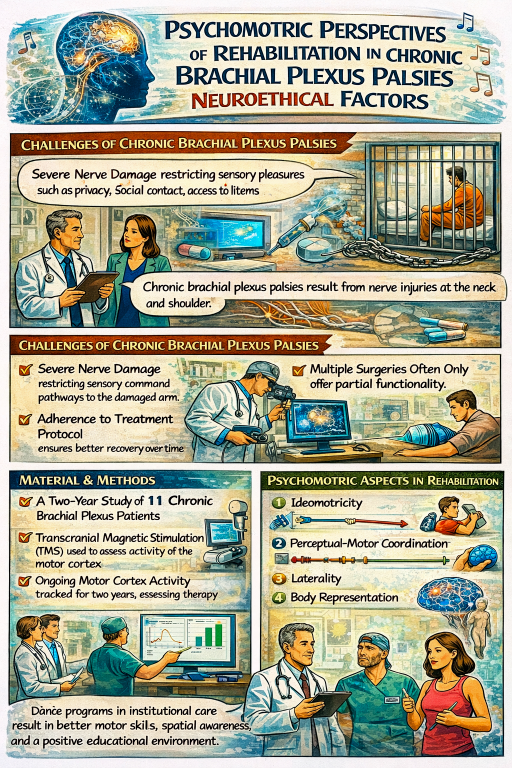
Background. The perspective of ongoing electric signals within the motor cortex, conditioned by continuous rehabilitation strategies (doubled by adherence to the treatment protocol), is of interest related to understanding how cerebral plasticity is being modulated in adult traumatic brachial plexus (BP) lesions. Very often, patients with chronic BP lesions tend to be less compliant to rehabilitation therapy over time, since multiple reconstructive microsurgery interventions may not always offer a proper upper limb functionality, especially in severe, complex BP cases. Material and methods. In order to asses the ongoing psychomotric projection of the limb's representation among the motor cortex, in relation with long term rehabilitation protocol we followed up a group of 11 chronic patients, by transcranial magnetic stimulation (TMS) during a time-lapse of two years. Results. Although modest in relation with amelioration of the deficit on the MRC scale, the patients had mild improvements of the parameter latency, but more important, by assessing the amplitude of the motor evoked potential (MEP), we observed a dynamism of the motor area. This we consider suggestive for ongoing psychomotor components stimulated by rehabilitation: ideomotricity, perceptual-motor coordination, laterality and body representation, as a foundation in maintaining a proven measurable potential of continuous neuroplasticity. Conclusion. From clinical perspective, since psychomotricity actually means interdisciplinarity, this is the common denominator found in the collaboration between medical specialties: plastic surgery and reconstructive microsurgery, clinical neurology, electrodiagnostic and neuromotor rehabilitation.
Disclaimer: This image was generated using artificial intelligence and may contain inaccuracies or inconsistencies.
It is provided solely as a visual aid to facilitate the rapid understanding of the key ideas presented
in this article. Our editorial team conducts ongoing reviews of AI-generated images and will correct
or replace them whenever an error or discrepancy is identified or reported.
Authors:
Amalia
Vancea
, Kamer-Ainur
Aivaz
, Luiza
Spiru
Abstract:
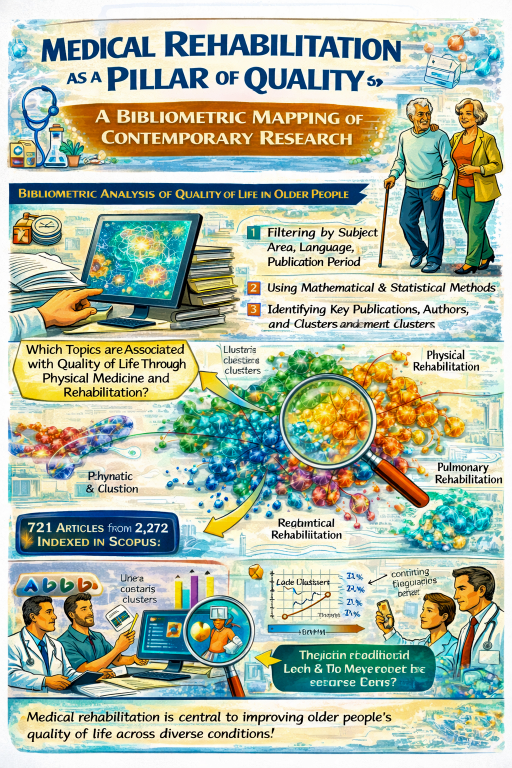
The present study aims to map the current field of research through a bibliometric analysis focusing on the concept of Quality of Life in Older People, taking Physical Medicine and Rehabilitation as a starting point. The methodology is based on the use of mathematical and statistical methods to analyze the scientific activity in the Scopus database over the period 2020-2023, identifying key publications, influential authors and thematic connections through keywords and co-citations. Filtering was performed by subject area, publication period and language of papers, resulting in 711 articles out of the original 2,272. The research focuses on identifying thematic clusters and the connections between them, with the main objective of decoding the relationships between various topics and their degree of centrality in the discussion on improving quality of life among older people. The results highlight areas of main interest as well as those niches less explored, opening perspectives for future research. This provides answers to the questions: which research themes are predominantly associated with quality of life through the lens of physical medicine and rehabilitation, and how these sub-themes interconnect in the research network.
Disclaimer: This image was generated using artificial intelligence and may contain inaccuracies or inconsistencies.
It is provided solely as a visual aid to facilitate the rapid understanding of the key ideas presented
in this article. Our editorial team conducts ongoing reviews of AI-generated images and will correct
or replace them whenever an error or discrepancy is identified or reported.
Authors:
Kostas
Zotos
Abstract:
From four-function calculators to calculators (or computers) with Computer Algebra System (CAS) software, Mathematics computing technology has advanced. With just a few button pushes, CASs can solve a wide range of mathematical problems, which is a true quantum leap in technology. The implications of having software in the classroom that can, for example, expand and factorize algebraic expressions, solve equations, differentiate functions, and find anti-derivatives are causing the mathematical community to engage in a heated debate about whether this is one of the most exciting or frightening developments in the history of education. It was only a matter of time before Artificial Intelligence entered the field of Science. This is now also the case with Mathematics, one of the dominant, perhaps the most basic, but also the most "difficult" of the sciences. The human mind, for better or for worse, has its limits. As we see in every manifestation of our lives, in this case, technology is being enlisted to help humanity take the next step, whether it has to do with automation and practical matters, or with knowledge and exploration. Creating a model that is understandable to humans is the primary objective of Artificial Intelligence. Additionally, concepts and methods from numerous mathematical fields can be used to prepare these models. In this paper, we will examine the use of AI in CASs and explore some ways to optimize them. The documentation sheets are the data source that we used to examine their characteristics. The research results reveal that there are many tips that we can follow to accelerate performance.
Disclaimer: This image was generated using artificial intelligence and may contain inaccuracies or inconsistencies.
It is provided solely as a visual aid to facilitate the rapid understanding of the key ideas presented
in this article. Our editorial team conducts ongoing reviews of AI-generated images and will correct
or replace them whenever an error or discrepancy is identified or reported.
Authors:
Dragos Alexandru
Andrioaia
, Vasile Gheorghita
Gaitan
, Bogdan
Patrut
, Iulian
Furdu
Abstract:
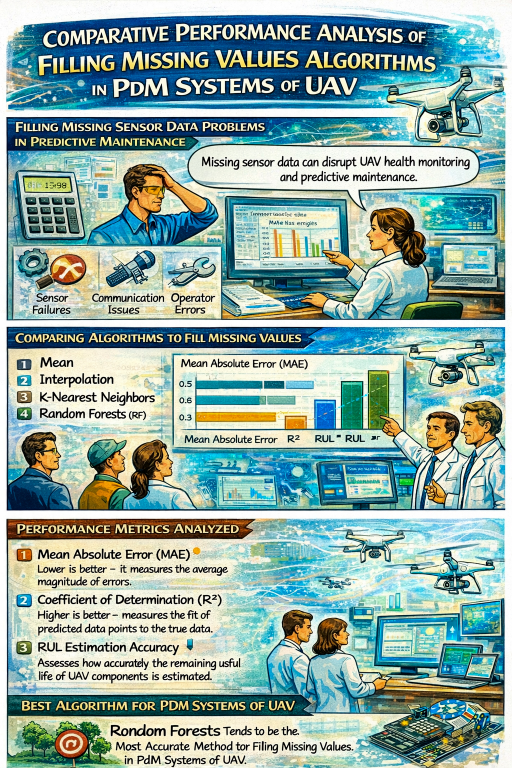
With the development of the IoT domain, the volume of data produced by various applications has also increased. Due to multiple reasons, such as sensor failure, communication system failure, and human errors, the data acquired from the sensors have missing values. The presence of missing values in the dataset affects the informational content of the dataset and thus affects the process of extracting knowledge from the data. In this paper, the authors present a comparative analysis of the performances of the methods of filling in the missing values, such as method, Interpolation, Mean, the K-Nearest Neighbors (KNN), and Random Forests (RF), on the data coming from a Predictive Maintenance (PdM) system that can be used at Unmanned Aerial Vehicle (UAV). The data on which the performance of these methods has been studied comes from a PdM system from the UAVs, used to identify the defects of the Brushless DC (BLDC) motors and estimate the Remaining Useful Life (RUL) of Li-ion batteries.
Letter to Editor
Disclaimer: This image was generated using artificial intelligence and may contain inaccuracies or inconsistencies.
It is provided solely as a visual aid to facilitate the rapid understanding of the key ideas presented
in this article. Our editorial team conducts ongoing reviews of AI-generated images and will correct
or replace them whenever an error or discrepancy is identified or reported.
Authors:
Mioara
GrigoraȘ
, Anamaria
Ciubară
Abstract:
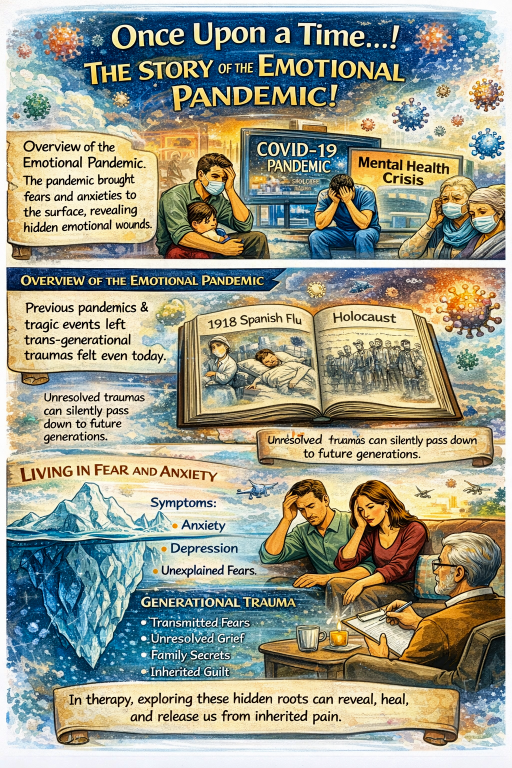
The article that we will present tries to give an overview of how the pandemic affected society, accentuated certain fears, worries and brought to the surface all the hidden emotional problems. If we take a look in history, we see that similar events in the past - the Spanish flu, the Holocaust - caused trans-generational traumas whose effects can still be felt today. Likewise, the article will highlight how major traumatic events that happened even three generations before birth can influence the way we live our lives. That is possible because unprocessed traumas leave their mark on each new generation until they find their solution. As individuals, we love our families very much and have unconscious loyalties to some of its members, copying their mistakes, dramas, and thus reliving their stories. In the case study that we will present, we started from the idea that to discover these legacies it actually means listening to the wider story of the client, which starts from the previous generation. The symptom is often just the tip of the iceberg, while underneath lays a whole story. At the start of the therapeutic process, we approached a complete intervention on the case, which involved the approach in the socio-familial system and emotional integration. We took into account the life history of the client and his family, gathering information about boundaries, rules, rituals and family loyalties, messages received in the family environment, significant life events, defense and survival strategies. All these factors helped us decipher the symptom behind the story.











 ▲
▲