
Agata
Asofroniei
Abstract:
First Pages of BRAIN, Issue 3, Volume 9











 ▲
▲

p-ISSN: 2068 - 0473
e-ISSN: 2067 - 3957
10.18662/brain
DOI prefix: 10.70594/brain (currently edited by EduSoft) | 10.18662/brain (when was edited by Lumen)
4 issues/year (occasional additional issues)
Web of Science (ESCI, IF 0.6), EBSCO, Google Scholar etc.
Member in CrossRef
CURRENT ISSUE 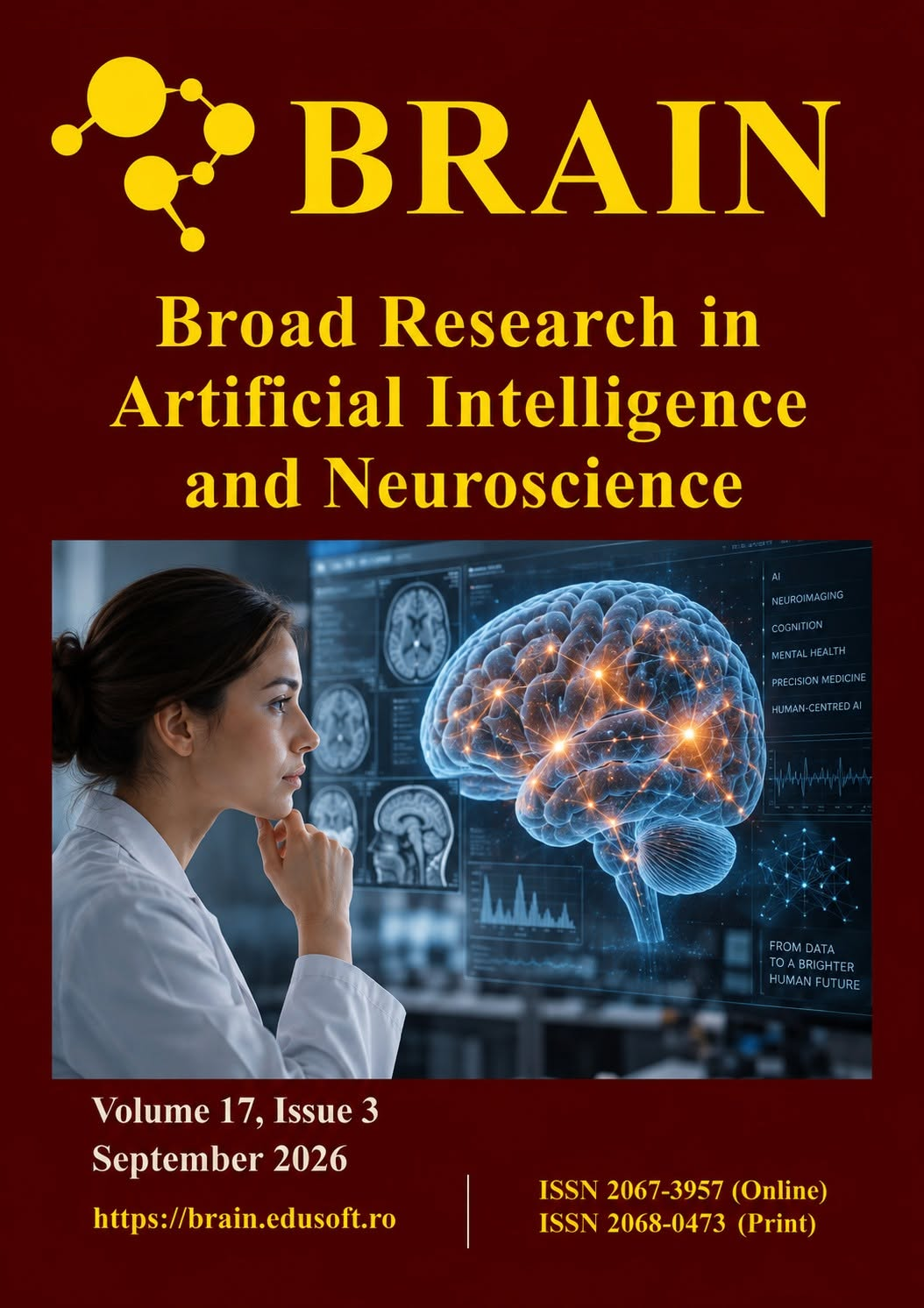
LAST 2 PREVIOUS ISSUE
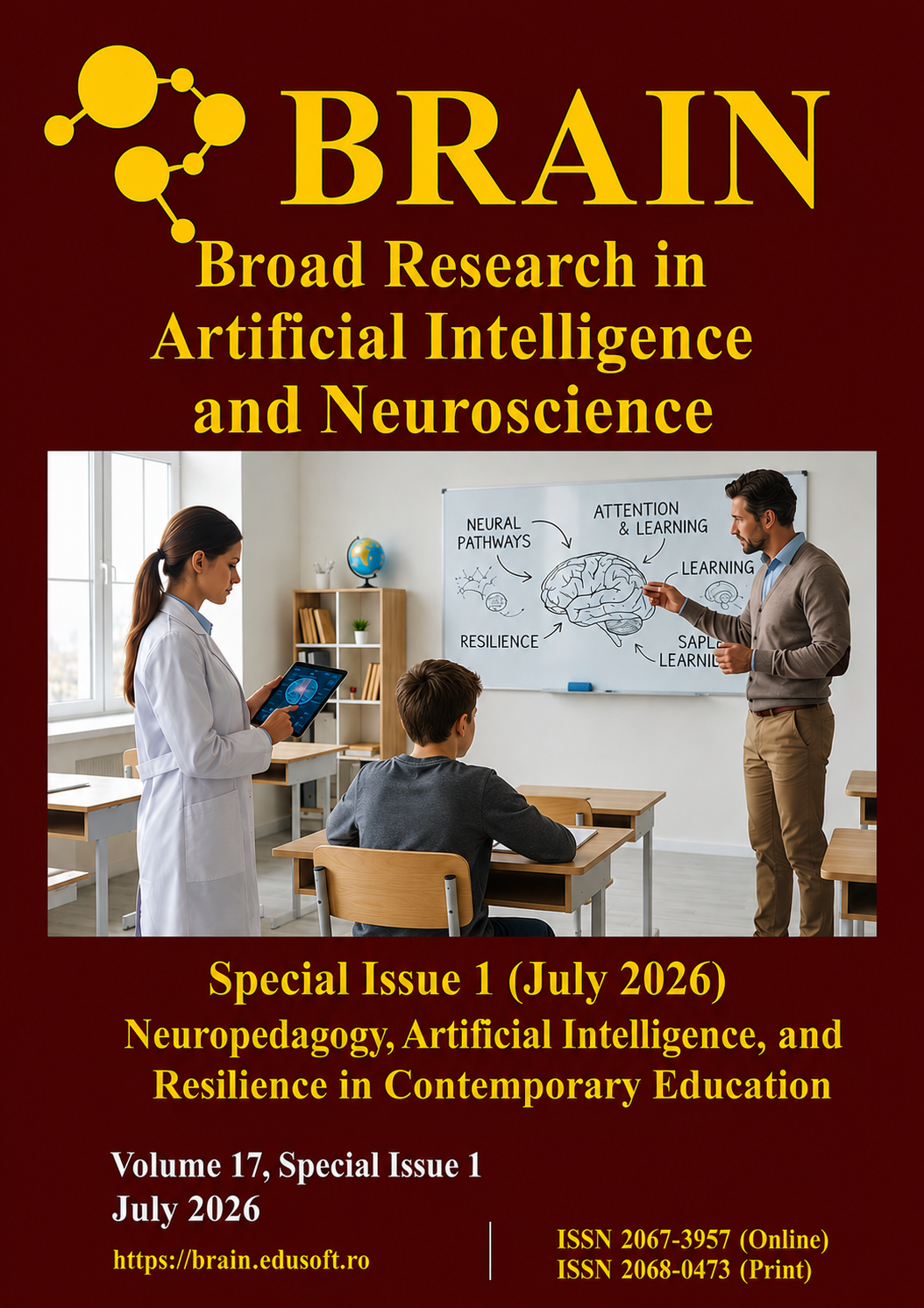
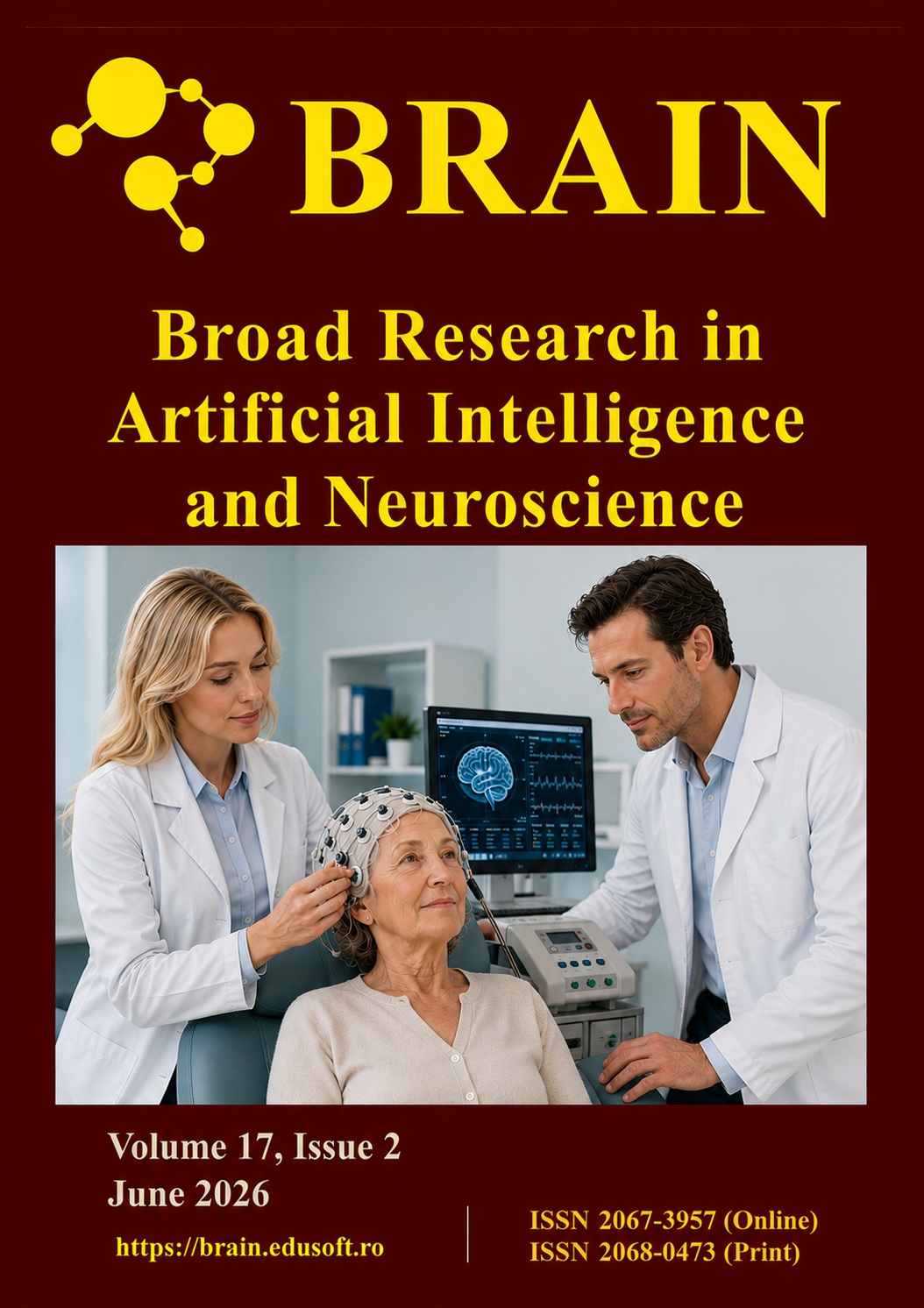


Disclaimer: These images were generated using artificial intelligence and may contain inaccuracies or inconsistencies. They are provided solely as a visual aid to facilitate the rapid understanding of the key ideas presented in these article. Our editorial team conducts ongoing reviews of AI-generated images and will correct or replace them whenever an error or discrepancy is identified or reported.

Disclaimer: This image was generated using artificial intelligence and may contain inaccuracies or inconsistencies. It is provided solely as a visual aid to facilitate the rapid understanding of the key ideas presented in this article. Our editorial team conducts ongoing reviews of AI-generated images and will correct or replace them whenever an error or discrepancy is identified or reported.
Authors:
Disclaimer: This image was generated using artificial intelligence and may contain inaccuracies or inconsistencies. It is provided solely as a visual aid to facilitate the rapid understanding of the key ideas presented in this article. Our editorial team conducts ongoing reviews of AI-generated images and will correct or replace them whenever an error or discrepancy is identified or reported.
Authors:
Disclaimer: This image was generated using artificial intelligence and may contain inaccuracies or inconsistencies. It is provided solely as a visual aid to facilitate the rapid understanding of the key ideas presented in this article. Our editorial team conducts ongoing reviews of AI-generated images and will correct or replace them whenever an error or discrepancy is identified or reported.
Authors:
Disclaimer: This image was generated using artificial intelligence and may contain inaccuracies or inconsistencies. It is provided solely as a visual aid to facilitate the rapid understanding of the key ideas presented in this article. Our editorial team conducts ongoing reviews of AI-generated images and will correct or replace them whenever an error or discrepancy is identified or reported.
Authors:
Disclaimer: This image was generated using artificial intelligence and may contain inaccuracies or inconsistencies. It is provided solely as a visual aid to facilitate the rapid understanding of the key ideas presented in this article. Our editorial team conducts ongoing reviews of AI-generated images and will correct or replace them whenever an error or discrepancy is identified or reported.
Authors:
Disclaimer: This image was generated using artificial intelligence and may contain inaccuracies or inconsistencies. It is provided solely as a visual aid to facilitate the rapid understanding of the key ideas presented in this article. Our editorial team conducts ongoing reviews of AI-generated images and will correct or replace them whenever an error or discrepancy is identified or reported.
Authors:Introduction: Considering the importance of emotional intelligence and its impact on different spheres of life, including career progression, job satisfaction, work environment and organizational performance, this article has been designed to determine the relationship between emotional intelligence and organizational culture of nurses.
Methods: The research is a descriptive analytical and cross-sectional study which was performed on 168 nurses of Ayatollah Rohani Hospital in Babol using two emotional intelligence questionnaires (?=0.93) and Hofstede organizational culture questionnaire (?=0.73). Sampling method was simple random. Data were analyzed using descriptive and inferential statistics (Pearson correlation coefficient test).
Findings: There is a direct and significant relationship between emotional intelligence and organizational culture (r=0.61); also, there was an inverse and significant relationship between emotional intelligence and male-female cultures (r=-0.23); there was no relationship between emotional intelligence and other organizational culture scales, including individualism-collectivism, trust-risk culture, and the culture of the distribution of just-unfriendly power.
Conclusion: Considering the relationship between emotional intelligence and organizational culture in this study, and also the influence of some of the components of emotional intelligence on organizational culture, education of all indicators of emotional intelligence is recommended for the growth and enhancement of individual and professional capabilities of individuals.

Disclaimer: This image was generated using artificial intelligence and may contain inaccuracies or inconsistencies. It is provided solely as a visual aid to facilitate the rapid understanding of the key ideas presented in this article. Our editorial team conducts ongoing reviews of AI-generated images and will correct or replace them whenever an error or discrepancy is identified or reported.
Authors:Adopting an industry project-oriented approach in Higher Education teaching, research and management activities, under given quality metrics, has been intensively studied within Agile software development practices. The current work investigates Agile applicability and its practical implications into Higher Education, through a Systematic Assessment. The lack of a secondary study approach results in trending gaps and misalignments between new research proposals and the current state-of the art. Directions for further research and specific current developments are addressed in a structured manner, through relevant distributions of the publication fora according to Agile facets (research areas, methodologies, type of intervention and contribution). Study selection and data extraction have been performed under the Systematic Mapping protocol (question formulation, selection and filtering, mapping) offering a conclusive review on means of Agile integration over almost a decade.

Disclaimer: This image was generated using artificial intelligence and may contain inaccuracies or inconsistencies. It is provided solely as a visual aid to facilitate the rapid understanding of the key ideas presented in this article. Our editorial team conducts ongoing reviews of AI-generated images and will correct or replace them whenever an error or discrepancy is identified or reported.
Authors:Introduction: Professional self-concept is an individual's perception of himself as a professional and influences his thinking, role evolution, professional behavior and performance. Integrated education technique provides the opportunity for interaction and feedback at higher levels of learning. Among employed job, nursing needs to be further enhanced by professional self-concept. Therefore, present study aimed to determine the effect of integrated education of operating room skills on the undergraduate operating room students’ professional self-concept.
Background and objective
Professional skills training and patient safety have become ever-increasing challenges for operating room instructors and students. Integrated education technique provides the opportunity for interaction and feedback at higher levels of learning. Applying this approach results in the discovery of knowledge and active learning, and facilitates the learning of problem-solving skills, creative critical thinking, clinical reasoning, and self-efficacy. The present study aimed to study the effect of integrated education of professional operating room skills on the undergraduate operating room students’ professional self-concept.
Methods: In this experimental study, 104 undergraduate operating room students who were studying the Faculty of Nursing and Midwifery of Shiraz University of Medical Sciences were selected as samples and randomly divided into two experimental and control groups. In both groups, the participants filled the research questionnaires before and immediately after the intervention (participating in an education program). The control group was taught only by the typical program and the experimental group weekly participated in 6sessions of blended education program. Kolmogorov-Smirnov statistical test was used to investigate the data normality. In addition, independent t-test, paired t-test, chi-square test and Fisher test were used to analyze the data.
Results: According to the results of present study, in the experimental group, there was a significant difference between the mean self-concept scores of the operating room students before and after the intervention (P = 0.005). Thus, the intervention increased the mean self-concept score. Also, the greatest change was observed in the leadership dimension.
Conclusion: The trainings designed with the purpose of developing the students' professional skills and provide a positive image of the profession, can increase the operating room students’ professional self-concept.

Disclaimer: This image was generated using artificial intelligence and may contain inaccuracies or inconsistencies. It is provided solely as a visual aid to facilitate the rapid understanding of the key ideas presented in this article. Our editorial team conducts ongoing reviews of AI-generated images and will correct or replace them whenever an error or discrepancy is identified or reported.
Authors:The pedagogical diary may show a versatile utility in the initial teacher training process. Our study aims to highlight the results obtained by capitalizing the pedagogical diary during a semester’s activity, the discipline of History of Pedagogy, academic year 2016-2017. The sample consisted of 70 1st-year students from the Pedagogy of Primary and Preschool Education. Our effort was to identify motivational-affective responses generated using the pedagogical diary and semistructured entries at the end of each seminar. The suggested structure comprised the requirement to write down the experiences generated by successively covering the curriculum topics. Their qualitative analysis focused on identifying the types of affective states, their correlation with types of motivation, as well as identifying specific types of motivation.

Disclaimer: This image was generated using artificial intelligence and may contain inaccuracies or inconsistencies. It is provided solely as a visual aid to facilitate the rapid understanding of the key ideas presented in this article. Our editorial team conducts ongoing reviews of AI-generated images and will correct or replace them whenever an error or discrepancy is identified or reported.
Authors:The development of computer systems for representation, storage and processing the knowledge related to a domain or specific field is a strong requirement nowadays, mainly for medical diagnosis and computer assisted therapy. The management of imprecision measurements, paradoxical data, and unconventional inference techniques is possible using the neutrosophic paradigm.
This paper describes the neutrosophic algebraic numbers and illustrates their usage in developing knowledge representation and processing systems. Finally, some ideas on medical diagnosis systems are presented.

Disclaimer: This image was generated using artificial intelligence and may contain inaccuracies or inconsistencies. It is provided solely as a visual aid to facilitate the rapid understanding of the key ideas presented in this article. Our editorial team conducts ongoing reviews of AI-generated images and will correct or replace them whenever an error or discrepancy is identified or reported.
Authors:Background/Aims: Impedance associated with PH monitoring is a new technique that can be used to detect acidic, weakly acidic, and nonacidic reflux episodes. Also, this technique can be used to recognize fluids and gas. The present study was conducted to evaluate the differences in the total number of reflux episodes and its composition in participants with nonerosive reflux disease (NERD) and minor disorders of peristalsis of esophagus and NERD based on the new technique of combined multichannel intraluminal impedance-pH(MII-PH) monitoring in Iranian population.
Method: This study was conducted on 1134 participants aged 18 to70 years with NERD. They were selected using a questionnaire and esophagogastroduodenoscopy findings. MII-pH monitoring test was performed for all the patients. The number of reflux episodes and its composition, DeMeester score, integrated relaxation pressure 4(IRP4), and distal contractile integral (DCI) were recorded.
Results: Of the 325 participants in the ineffective esophageal motility group, 66.7% showed a pathological acid exposure of time (EAET), which was more than the normal peristalsis group (43.6%).The frequency of upright and supine position of acid reflux was both 51.1% in ineffective esophageal motility (IEM) participants, whereas the frequency of upright and supine position of acid reflux in patients with normal peristalsis was 24.8% and 23.1%, respectively. Weakly acid reflux was more prevalent in NERD participants with IEM than participants with normal peristalsis.
Conclusion: The present study revealed that acid, weakly acid, and gas reflux were more prevalent in NERD participants with minor disorders of peristalsis of esophagus than in patients with normal peristalsis. Mean integrated relaxation pressure4 (IRP4) and distal contractile integral (DCI) were significantly lower in those with minor disorders of peristalsis of esophagus than in those with normal peristalsis.

Disclaimer: This image was generated using artificial intelligence and may contain inaccuracies or inconsistencies. It is provided solely as a visual aid to facilitate the rapid understanding of the key ideas presented in this article. Our editorial team conducts ongoing reviews of AI-generated images and will correct or replace them whenever an error or discrepancy is identified or reported.
Authors:
Disclaimer: This image was generated using artificial intelligence and may contain inaccuracies or inconsistencies. It is provided solely as a visual aid to facilitate the rapid understanding of the key ideas presented in this article. Our editorial team conducts ongoing reviews of AI-generated images and will correct or replace them whenever an error or discrepancy is identified or reported.
Authors:There exist at least two approaches to the teaching of every subject, including mathematics. The first one is as old as the world (or, at least, as the education). According to this approach, to teach something means to outline what you teach. This approach is appreciated by the great majority of teachers. Because the realization of this approach in most cases reduces to the telling of stories about what is taught, I call this approach by «storytelling».
There exists also another approach, which goes from the famous statement by Aristotle: «We learn something only when we do what we learn». From this statement, I think, was born the following idea by Herbert Spencer: «What does it mean to teach? — It means to encourage systematically the students to their own discoveries» (as it was formulated by George Pólya and Gabor Segö in the epigraph to the preface of their book “Problems and Theorems in Analysis” and repeated in Polya, G., (1981)). This approach to teaching is natural to call «discovering».
In this paper, I intend to look closely to these approaches (mainly, with respect to mathematics), to identify their advantages and/or disadvantages, and to consider the work of brain hemispheres within these approaches.

Disclaimer: This image was generated using artificial intelligence and may contain inaccuracies or inconsistencies. It is provided solely as a visual aid to facilitate the rapid understanding of the key ideas presented in this article. Our editorial team conducts ongoing reviews of AI-generated images and will correct or replace them whenever an error or discrepancy is identified or reported.
Authors:In this paper, queueing system with losses (M\M\m\-\m) is investigated depending on First in First out (FIFO) technique. The main task is to find the earnings of three airline companies in international airport of Baghdad, by establishing the best number of service centers. The researcher was present on daily basis to collect data related to travelers arrival and departure time from centers of services. The researcher calculated arrival averages and service (? ) ? , by using (Professional EasyFit5.6). Also, he observed distribution of service centers for all previously mentioned companies. The aim of researcher is to determine arrivals time of airline companies, service centers which are Poisson distributed and how service time (Exponential distribution) is distributed. Then, it is necessary to find the best service center depending on earnings indication of suggested model for each company, using Firefly Algorithm (FA) and writing the program by (Matlab R2015a) to show the results. And finally, the results are compared with Particle swarm Algorithm (PSO), (FA) algorithm is proved to be better as compared to (PSO).

Disclaimer: This image was generated using artificial intelligence and may contain inaccuracies or inconsistencies. It is provided solely as a visual aid to facilitate the rapid understanding of the key ideas presented in this article. Our editorial team conducts ongoing reviews of AI-generated images and will correct or replace them whenever an error or discrepancy is identified or reported.
Authors: