










 ▲
▲




 Email this article
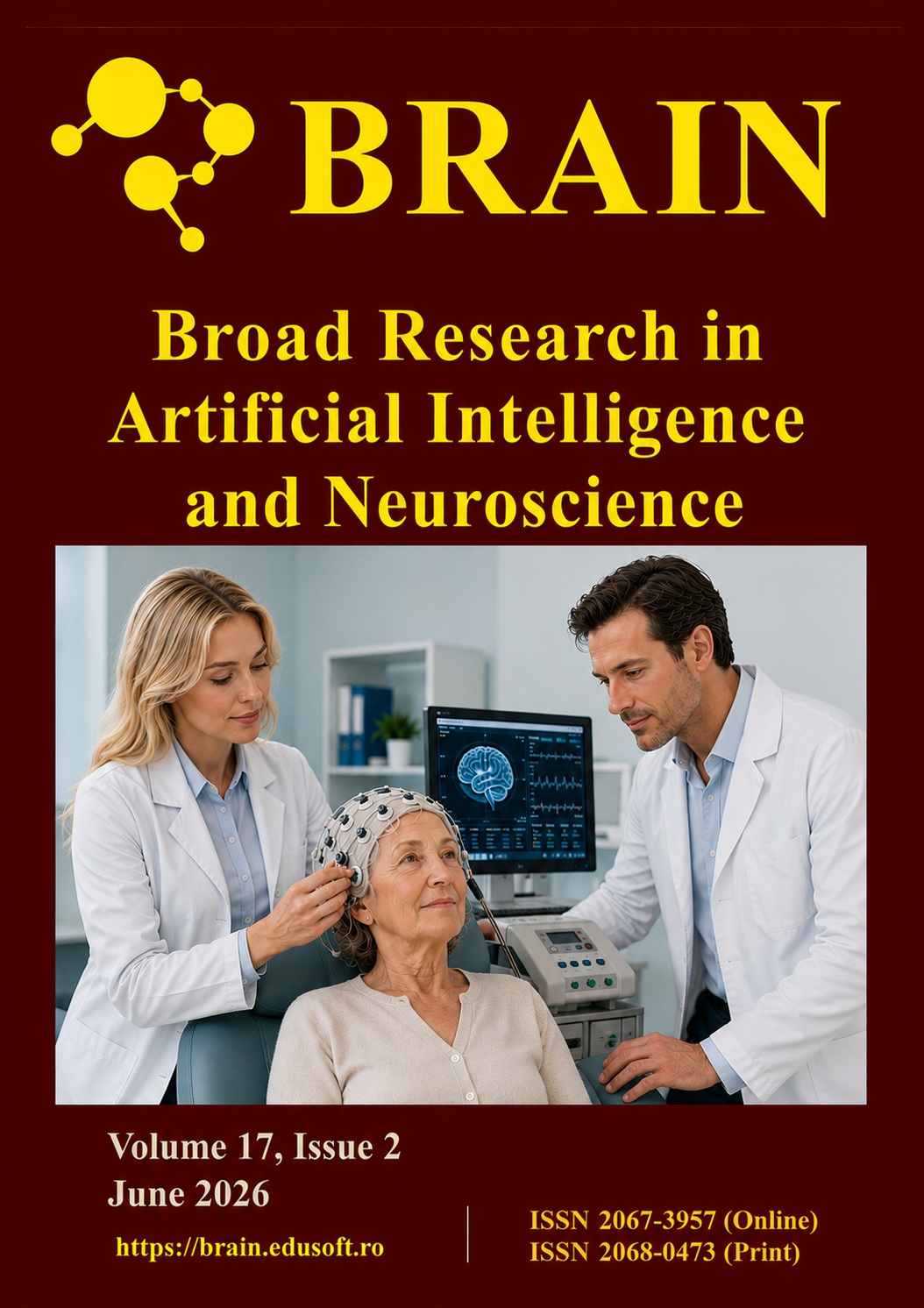


BRAIN. Broad Research in Artificial Intelligence and Neuroscience
Volume: 17 | Issue: 2 |
Neuropsychological Aspects of E-learning in Higher Education – Towards a New Educational Paradigm
Published June 3, 2026
❝
Cite
Abstract
The use of e-learning in higher education institutions (HEIs) enables the development of new educational models. These models help ensure that teaching remains responsive to ongoing scientific and technological progress. It also enriches and diversifies instruction across different disciplines. E-learning enhances the didactic potential of current instructional tools. It fosters the adaptation of teaching content, forms, and methods to meet educational demands. Special attention is given to technologies that stimulate neuroplasticity, lower stress levels, and support effective teacher–student interaction. The findings are significant for improving the overall effectiveness of e-learning and for strengthening students’ cognitive skills and emotional resilience. They create optimal conditions for developing students’ intellectual potential in an increasingly digitalised educational environment. Finally, an empirical study was conducted to examine the attitudes of e-learning users in HEIs towards the digitalisation of education.
Academic discipline and sub-disciplines:
Educational Technology; Pedagogy; Neuroscience
Keywords
DOI: http://dx.doi.org/10.70594/brain/17.2/14
